CONSULTING SERVICES
PASTURE & RANGE HEALTH ASSESSMENTS
Assessing the Health of Native Grassland or Tame Pasture
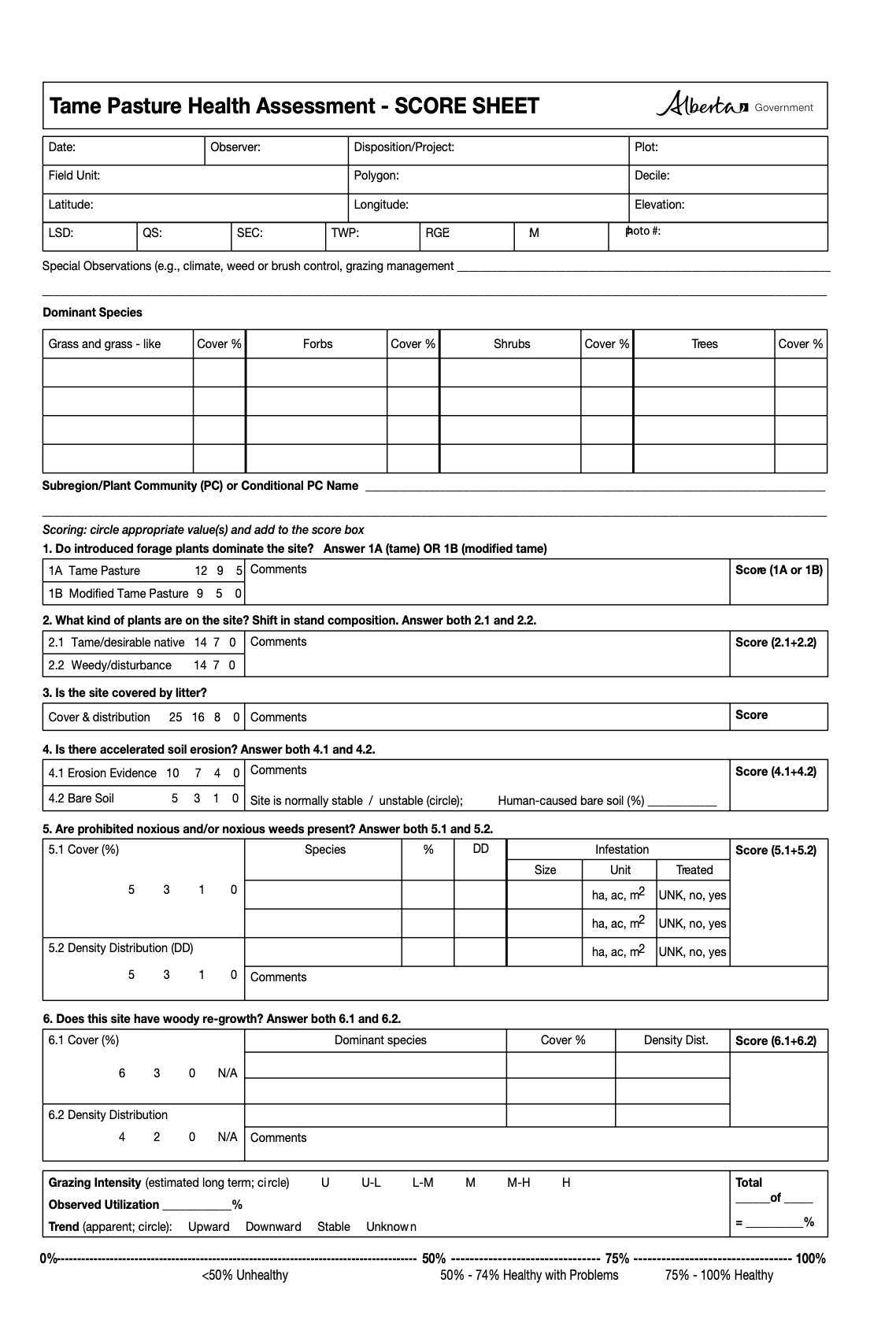
To many, a pasture assessment (or range assessment) is merely taking the truck or quad out to the pasture, driving around a little bit to see if there’s any particular weeds that one needs to worry about, and that’s it. But, the reality is that a pasture/rangeland health assessment is much more involved than that.
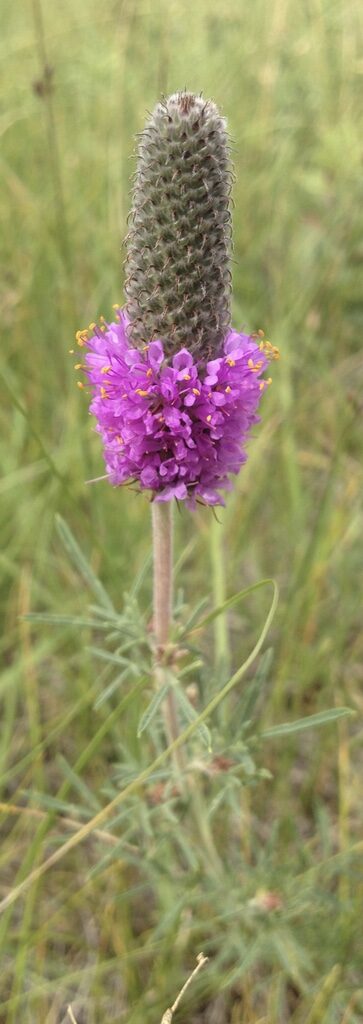
It means getting down on your hands and knees and identifying what is growing there, whether you see some soil exposed between plants, and how much dead plant material (also called plant litter or residue) is being left behind after every grazing period. The first, what is growing there, is most important, because it goes far, far beyond, “here’s a bunch of grass,” and “over there, there’s what looks like some weeds.” No, it means mean identifying different plant species in your pasture or rangeland stands so that you can see which are those you want more of on your land and which you want less and which you’ll just have to live with.
It takes a trained eye to know what to look for and where. I have done numerous assessments for over 10 years in different natural areas of Alberta, and have always found the important key to any assessment is the ability to identify plant species. Individual plant species, alone, can tell me a story about what is going on in your pastures or on a native grassland, such as if it’s healthy and vibrant or needs some TLC.
Why, you may ask, is a rangeland health assessment so important? Why does it even matter?
Many a range agrologist would tell you to think of it like the health of a human body. Would you rather be sick or healthy? Being ill is no fun and takes you out of commission when you’d otherwise want to work or play. Being healthy, on the other hand, allows us to be more productive and enjoy life that much more. The same contrast can be attributed to rangelands, be they tame or native. Healthy rangelands are productive in providing food and habitat for wildlife and livestock and are highly efficient at taking solar energy and water resources and turning them into forage biomass. They also feed other animals like insects, decomposers, birds, and our sometimes maligned mammalian and avian predators. Healthy rangelands hold on to soil better and protect it with that crucial “soil armour” we call plant residue, plus are more resilent to sudden weather changes in the form of water retention capability and being resistant to drought. Nutrients from dead plant matter as well as manure from animals are quickly recycled and available for plant uptake, requiring very little to no fertilizer. Finally, a healthy rangeland has quite a diversity of different plant species, from different grasses to wildflowers to shrubs and trees, dependng on the area.
ALL of these functions translate to benefits for you, the producer, with lower feed costs, a stable source of forage during drought, lower maintenance costs in the form of pesticides and fertilizers, and reduced concerns of noxious weeds. Resource managers like the folks from Ducks Unlimited, Nature Conservancy Canada, and your local rangeland agrologist see healthy rangelands in the form of quality wildlife habitat, valuable fisheries habitat, ample grazing opportunities, preventing soil erosion, and other benefits. The public benefits because they see aesthetic landscape values in healthy rangelands, that watersheds and water quality is protected, there are large carbon sinks being maintained, there’s a mindblowing amount of biodiversity from plants to animals, and there are opportunities for recreational activities like hunting, hiking, birdwatching, and sight-seeing. In the aspect of socio-economics and governance of rangelands on private and crown land, there are increased benefits to society as a whole with flower conflicts to resolve, and less regulation and enforcement headaches to go through. Healthy rangelands lower costs in more ways than just financially!
Even though I’m talking rangelands, this also applies to tame pastures. Rangelands encompass tame pastures, not just native grasslands. And, just like healthy native grasslands, healthy tame pastures pose the same ecological, productive and aesthetic values everyone can appreciate when they are in a healthy state.
All of this simply takes the time and effort to make sure rangelands are assessed for their diversity, litter levels, absence (or presence) of bare soil, and presence of noxious weeds. If you don’t have the time or skillset to do it all yourself, I have the skillset, time, and resources to do all that for you.
All you need to do is get in touch with me via the button below and we can get started on the details pertaining to your operation.
(Pasure or range assessments are also crucial to start building on your grazing plan for your operation. They help give you an understanding of not only what you have in your stands, but how much.)
How I Can Help You
The first contact is always free. These demo calls—or visits—give me the opportunity to see where things are at and if you’re a good fit for what I am able to help you with. Only after this will a fee be charged. (For the time being, clients outside of Canada will receive my services for free.)
You can get a hold of me in the following ways:
Phone:
+1(780)289-9143
EMAIL:
Be sure to include your email, phone number, name, location, and details of what you wish me to assist you with.