FREQUENTLY ASKED QUESTIONS
QUESTIONS EVERYONE WANTS TO KNOW
Do you have a burning question about ruminants, or anything related to ruminants? It might very well be answered below!
Your Frequently Asked Questions Answered About…
You may be wondering: Where and how did I come up with these questions? Did I just pull them out of random thin air, hoping they would qualify as an FAQ?
Nope. I actually found a nifty trick thanks to the Internet, where I use an analytical tool from sources like Google Analytics, Answer the Public, and other sources to find out what the most common questions people type in the search bar regarding ruminants, cattle, bison, sheep, the rumen, and more on search engines like Google, Yahoo, and Bing.
And bingo, I get all I needed exported on a spreadsheet.
I know, it sounds very nerdy, because, well, it is. Guilty as charged.
So, how do you find the FAQ you’re looking for? If you landed on this page because some SEO brought you here, and find a pile of questions to sift through, search engines like Google already answer this for you because they automatically highlight the very wording you’re looking for. Easy-peasy.
But, if you’re just visiting this page and want to find a specific question you’re inquiring about (and you’re on your computer), use the keyboard shortcut Ctrl+F (for PC users) or Command+F (for Mac users) to bring up the search bar in your browser, then type in the word you’re inquiring about, and your question may or may not come up, depending on what you typed in. Here’s how to search this page on a smartphone or tablet.
To see the answer to the question, simply hit or click on the double arrows to the right of each question or the question itself.
Now, here’s the real kicker: if you’re not finding a question (or have a question) that’s not here, let me know by reaching out to me HERE. I would be happy to hear from you and answer your question!
More questions and their respective answers will be added soon. Stay tuned!
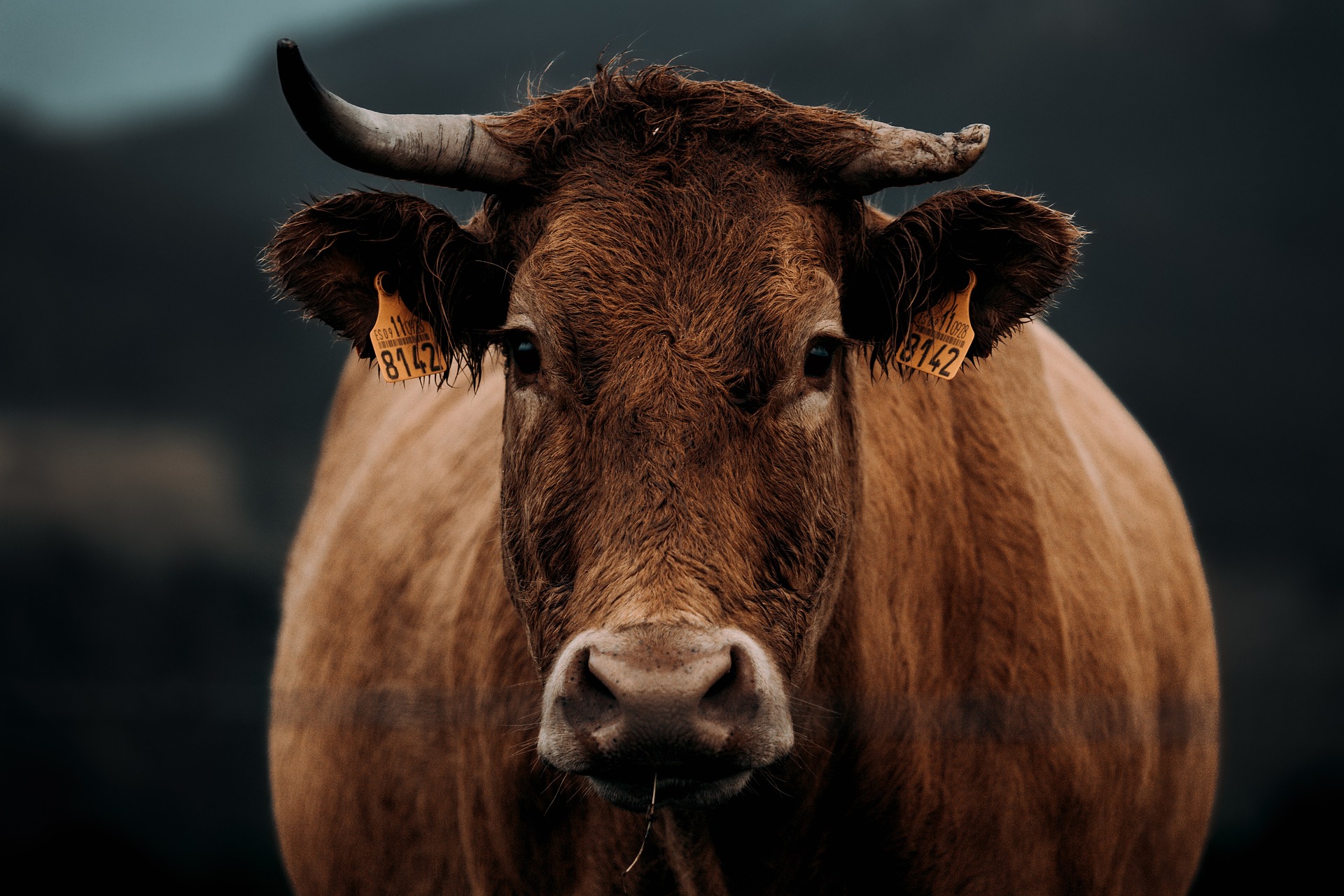
cows
Can cows have horns?
Yes. Most cows of most breeds are born with the ability to grow horns, from dairy and beef cows to “exotic” breeds normally found on continents like Africa.
There is a too-common urban myth that only bulls have horns, and any bovine that lacks horns is a cow. This is completely false. Horns in cattle do not determine the sex of a bovine. The presence of an udder or a scrotum with two testicles do.
Can cows swim?
Yes, they can. They’re not the best swimmers and can drown if the water is too fast and dangerous for them to swim in (just like with you or your pet dog, for instance), but they know how to do the “doggy paddle” and keep their heads above water to safely get across a river. Cows don’t like to swim all that much—they’d rather stay on dry land for as long as possible, submerging themselves belly-deep only on really hot days in a pond or lake or staying by the river’s edge where some tasty vegetation may be had—but they’ll do it if they have to. You won’t find them swimming across a great lake or an ocean, though; they’re not whales!
Why are cows sacred in India?
India as a country do not wholly consider cows as sacred. Rather, in the Hindu culture (not Islam, which is a second major religion in India), cows are revered. Hindus believe the cow symbolizes purity, motherhood, and non-violence (Ahimsa). The reverence dates back to the ancient Vedic period, when cows were a central part of agrarian culture and the economy.
The goddess Krishna is depicted as a cow goddess (Govinda), which elevates the animal’s status in Hindu mythology. Hindus believe that the cow represents Mother Earth because it provides sustenance—milk, butter, and ghee—without demanding anything in return.
Cattle in early rural India were (and still are) important for the labour they provided to plow fields, fertilize crops, provide dung for fuel, and pull carts and wagons. Their practical importance was so critical for Indian people’s survival, protecting them became a moral imperative.
Are cows smart?
They have some level of intelligence, yes, such as recognizing certain animal and human faces, figuring out how to open gate latches or working the levers on automatic waterers or food containers. Most of their presumed intelligence at “solving complex problems” is food (or water) motivation; in that, if they’re hungry enough, they will figure out how to get to where they know there is food or water and won’t stop until they solve it and recieve their reward.
Cows have quite the spatial memory where they remember where the best watering, grazing/food, shelter, and food sources are and how to get to them.
They also have complex social bonds and interactions with each other, possibly remembering 50 faces of their herdmates (including humans and farm pets as well) and forming relationships or “best friends” with certain members in the herd.
Cow herds with related females will often stick with those whom they are family with, like mothers, daughters, aunties, grandmothers, neices, etc. They form a heirarchical structure in the herd consisting of a lead matriarchical cow and the rest following down the structure to the weakest cow. Hierarchy never stays the same, as cows under the lead cow will always challenge each other in some way like body posturing or brief scraps for their spot in the hierarchy.
Cows communicate through a variety of body posturing from the nose to the tail, which can be highly complex and subtle to the human eye. They also have certain vocalizations for instances like if they’re lost, alerting for danger, letting everyone know the feed truck (or tractor) is coming to feed them, cows searching for their calves, bulls challenging other bulls, and so on. Cows/cattle do little vocalizing amongst themselves, usually.
Can cows go downstairs?
Cows are better at going down a ramp than down a set of stairs. They can go downstairs, but it’s very difficult for them to the point where it may be impossible. Steep stairs are a no-go; shallower stairs, however, may be more passable.
The majority of a cow’s weight is on her front end, coupled with the massive rumen that contains a lot of digesta (enough to fill a bathtub), making the likelihood of falling down those stairs and injuring herself pretty high. Their short legs and stiff hocks also make it challenging for them to walk down a set of stairs.
Cows are better adapted to navigating slopes or flat ground as opposed to step-like topography, and will instinctively choose the former over the latter. Cows are not goats, remember.
So the short answer is no.
Who discovered cow's milk?
This has been a very popular contentious question that has seemed to conclude one answer: nobody. Ancient peoples, long before the domestication of livestock, already knew where milk came from by observing mothers feeding their young (including humans). The question should really be, who discovered that cows’ milk tasted good enough to drink? Even then, nobody really knows.
Many theorize that through the development and domestication of wild aurochs, wild goats and wild sheep some 8,000 to 10,000 years ago, using every part of the animal was part of the daily life of the ancient human who was trying to survive.
One possible theory was that a shepherd who was grazing his herd was so thirsty, yet scared to leave his herd for fear of a predator taking the opportunity to take one of his livestock, that he decided to risk trying to milk his cow (or goat) because obviously the young were doing very well just on their mothers’ milk. Out of desperation (risk of dying of dehydration), this shepherd found an incredibly delicious source of nourishment that quenched his thirst and was eager to tell his family and other villagers when he returned about his discovery. Naturally, they were probably skeptical (understandably), but when he coaxed them to try it out, and they too found it to be deliciously delectible and thirst-quenching, word spread like wildfire, and milk has been a popular beverage substance to this day.
Are cows only female?
The strict, biological definition of a cow is a mature, female bovine.
However, the urban community has constantly pushed (inadvertently, mind you) for the word “cow” to be used as generally and colloquially as possible when referring to ALL sexes and ages of cattle, from newborn calves to big mature bulls.
The agricultural community has constantly battled this colloquial wording for decades, to no avail. Every person involved in the cattle world know that calling a herd of bulls “cows” would land you as the butt of many jokes amongst your neighbours and ag professionals.
What do cows eat?
Cows (and cattle) eat vegetation. They primarily eat grass, some forbs (broad-leafed plants), as well as tree and shrub leaves.
On farms and ranches cows are either out grazing in pastures (some call them “fields”) where they can select what they want to eat, or they’re in barns or open corrals where they are fed certain feeds like hay, silage, grain, and sometimes even straw.
They are also fed a variety of by-products from other industries like dried distillers grains from ethanol production, brewer’s yeast which comes from breweries, vegetables not suitable to be sold in stores to people, soybean meal or canola meal from pressing soy or canola for their oil, and many others.
Can cows sleep standing up?
No. Cows prefert to lay down “recumbant” where their back legs are held under them on one side and their front legs are folded under and propped up on one elbow. Sometimes they will lay out on their side if they’re needing a particularly deep sleep.
They will, however, doze while standing, but it’s not really sleeping, nor even really napping. Their eyes may be closed for brief periods of time, but they’re still fully aware of their surroundings.
Can cows nap while standing up?
Not particularly. Most of the time, if cows want to nap they will lay down on their fronts (see previous question on sleeping standing up) as opposed to remaining standing. They will occasionally doze while standing, but still remain aware of their surroundings unlike when they’re sleeping or napping.
Can cows eat apples?
Yes they can, however there has been cases where cows have choked on inhaling—rather than chewing—an apple and it lodged in their trachea. Ideally, apples should be fed cut up so that they won’t choke on them, or not fed at all.
Cattle are not like horses that can eat an apple with ease; cattle lack front upper teeth and the capacity to cut and chew an apple up before swallowing. Rather, they grab with their tongue and swallow, especially if it’s a smaller apple that isn’t worth chewing. If it’s a bigger apple, then maybe they’ll chew on it a little bit before swallowing, but don’t expect them to take the time to chew before swallowing.
Will cows eat apples?
Yes, they certainly will! When they know it’s a very sweet and tasty treat, they may try to dig in your pockets for one if they smell one on you, so be careful!
Are cows herbivores?
Yes, cows (as in, bovines, in the colloquial sense) are herbivorous.
Almost all mature female ungulates, called “cows,” are herbivorous, including bison, elk, caribou, gaur, and wildebeest. Other non-ungulate females called “cows” are carnivorous, such as whales, walrus, and seals.
Are cows friendly?
For the most part, no. Most cows would rather be left alone than to act “friendly” like a pet cat or dog. It’s not that they’re aggressive, they’re just peacable creatures that would rather be left alone.
If they’re being “friendly,” it’s because they’re curious about you and want to check you out. This isn’t all too common, as most cows would rather view you (and smell you) from a safe distance, and, should you try to approach, feel the need to move away to maintain that safe distance from you.
Other times cows can seem “friendly” but in fact are eyeing you suspiciously because they have a baby to protect, and could see you as a maurading predator. A “cow” that is really a bull could also see you as a threat and come up to you to make sure you’re not going to be causing any issues with his harem. Both protective mothers and bulls can be dangerous, so if they seem like they’re approaching you in a “friendly” yet aggressive way (pawing the ground, throwing their heads, displaying their side, etc.), it’s best for you to move away slowly and avoid eye contact. Don’t try to approach.
Rarely will you get a truly friendly cow, and most of these have been either bottle-raised and are very used to people (like in petting zoos), or have been raised as show stock where they’re used to crowds, all sorts of people, and don’t mind the two-legged human company. Cows in petting zoos have been desensitized to people, and seem more bored with the matter of being constantly bombarded with people wanting to touch, pet, hug, and cuddle them, like it’s just another day at the office.
For the most part, however, it’s best to treat cows like they’re not pets. Treat them with respect, respect their own comfort bubbles if they’re showing they only want to keep you at a distance, and everything will be just fine. (Also… keep your dog on a leash. Please.)
Are cows native to [North] America?
Cows, as in the domestic bovine in the colloquial sense, are not native to North America. They are native to Europe and Asia.
Are cows mammals?
Yes, cows are indeed mammals. They are warmp-blooded, fur-covered animals that gives birth to live young and provide nourishment to their young in the form as milk. All these classify cows as mammals.
Are cows and bulls the same?
Cows and bulls are the mature female and mature male sexes of a variety of ungulate species, respectively, including domestic cattle. Therefore, no, they are not the same; however, they are of the same species.
Cows are feminine-looking, produce milk, and give birth to young. Bulls are masculine (more muscular build) and bear male reproductive organs that are used to mate with cows in order to produce the next generation.
Can cows eat chocolate?
Yes, cows (but not young calves) can eat chocolate in moderate quantities. Their rumen microbes can break down the toxic substance theobromine before it reaches much of the body. Many farmers feed their cows waste candy and bakery products (in moderation) without ill effects, provided they are properly introduced to such high-carbohydrate foodstuffs and do not overfeed their cows these waste products. Feeding them too much will cause rumen upset called acidosis.
Young calves, however, cannot eat chocolate as their rumens are underdeveloped and are more sensitive to the effects of theobromine.
Can cows jump?
Yes, they certainly can! Many cows (and bulls) have been seen clearing a 4-, 5-, or even a 6-foot gate or fence (or higher) from a stand still, depending on how desperate they are to escape and their athletism.
Fatter, bigger cows have a little harder time clearing something so tall, but don’t underestimate their strength, power, and will to do so. They may get hung up on a fence or gate at first, but they know how to wiggle their weight (most of the time, some just get stuck) to get over and continue on their way.
Are cows colour blind?
Cows are partially colour blind. They lack the retinal receptors for perceiving reddish hues, so they see reddish, orange, purple, or pink hues as brown, black, or grey. They can mainly see yellow and bluish hues.
Can cows eat carrots?
Yes, cows can definitely eat carrots. Carrots are often fed in a controlled manner in some TMR (total mixed ration) diets of dairy cows and sometimes feedlot beef cattle due to its high carbohydrate (sugar) content. The high carotene content in carrots can make the fat in milk and beef more yellow, which may be desirable if farmers are trying to market milk and beef as “grass-fed.”
Carrots are also a desirable sweet treat for cows and cattle.
Can cows eat alfalfa?
Yes, cows can eat alfalfa. Alfalfa is one of the most popular types of forage species to grow for cattle feed, along with clover. Both clover and alfalfa are in the same family (Fabaceae). Alfalfa is often fed along with grasses like timothy, bromegrass, fescues, or wheatgrasses.
Alfalfa is most commonly harvested for hay, less so for baleage or silage. It is also commonly grazed; however, producers are often wary about putting their cattle on it because of bloat issues.
Alfalfa is highly digestable in the rumen, meaning that rumen bacteria can rapidly break it down. Tiny gas bubbles result, which traps gases that are normally regularly released through belching (or eructating). As more alfalfa is digested, more bubbles are formed leading to painful extension of the rumen walls. Thus, a cow is “bloated” because her stomach looks bigger than it should. She can stop eating and want to just stand around and try her hardest to burp to no avail. If a farmer or rancher doesn’t intervene quick enough, she can suffocate from the inside and die (the rumen puts more and more pressure on the lungs causing her to not be able to breathe properly, a.k.a asphyxiation).
The trouble is, alfalfa is very high in protein which makes it very desirable for growing cattle and cows in milk. Therefore, producers have learned to slowly introduce alfalfa into a cow’s diet and always be on the lookout for bloat. Also, many feed alfalfa along with non-bloating plants like grasses, which aleviate the considerable risks of bloat compared with feeding straight (nothing but) alfalfa hay.
Also, cows love eating alfalfa; it’s a sweet tasting feed they enjoy chowing down on. It’s just… bloat! Argh!
Can cows throw up or vomit?
Cows “throw up” very often when they are going to chew the cud. The difference is that they know to catch it in their mouth, and don’t let it be expelled onto the ground. Basically, it’s regurgitating a bolus of partly-digested feed to sit or stand and chew on.
True vomiting, like projectile vomiting or emptying stomach contents is next to impossible. It’s mostly to do with the complex multi-chambered stomach of the cow that makes it difficult (and exceedingly rare) to do so. An animal with a simple stomach (human, cat, dog, bear, pig, etc.) can easily vomit because it’s just a singular, simple stomach containing contents that can jettison up the esophagus and out it goes. With a ruminant? Forget it.
However, baby ruminants can vomit because their rumen is the size of a pea, and doesn’t fully mature until they’re around 3 months of age. A young calf, kid, or lamb can quite easily vomit because their stomach is very similar to any other simple-stomached animal (a.k.a “monogastric”).
Are cows dangerous?
Yes, they certainly can be. While they’re not as dangerous as a bear or a wild bison, they are still large, powerful, and remarkably fast (unlike the urban legend claim that tries to peg them as slow, gentle, peaceful, and stupid) and can easily kill you.
The most dangerous cow is a cow protecting her calf. A bull can be just as dangerous, especially when you give him a reason to be. Horned cattle are especially dangerous because they can gore you.
More people die from being killed by cattle than from being killed by sharks. Sharks have garnered a bad reputation for being dangerous, but they’ve got nothin’ on ol’ Bessy.
Can cows eat bananas?
Yes, cows can eat bananas as a treat. It is very high in potassium and energy, so it must be only fed as a treat and not more, otherwise it can cause digestive upset.
Can cows eat clover?
Yes. Like alfalfa (see the question “can cows eat alfalfa” above), clover is a popular forage species to grow and feed to cows, or have them graze. Unfortunately, like alfalfa, it can cause bloating issues. Despite this, clover is very high in protein and energy making it highly desirable for feeding dairy cows and growing cattle for meat. Producers have taken steps, as explained with alfalfa, to make clover less bloat-prone by mixing it with grasses in a hay mix or feed mix.
Can cows have twins?
Yes. Twins are fairly rare, however. It’s estimated that twins come about in one out of every 1,000 births.
Most cows can successfully raise twins if they have sufficient milk supply to feed both. If, however, a cow does not have enough milk supply, then the farmer or rancher will need to take one (or both) of the calves and bottle-feed it (or them) while also trying to keep it with its mother.
Some cows will reject one of the twins and keep the other. The rejected twin will need to be bottle-fed, however a farmer/rancher will also try to get that rejected twin to feed some from its mother, or find a surrogate mom to raise it.
Can cows be male?
In a strict colloquial sense, yes. But when most producers call cows cows because they’re mature female bovines, then absolutely not.
When we’re talking cows, like dairy cows or beef cows, we are talking about females, not males. If we’re going to be talking about male cattle, we would be discussing about bulls, bullocks, or steers, not “cows” specifically. That’s why most people in the agriculture industry, when being as general as possible about “cows,” refer to “cows” as cattle. It just makes things less confusing.
So no, when speaking about female cattle, cows really cannot be male.
Are cows aggressive?
Normally, no. Cows are, for the most part, pretty easy-going, placid, routine-loving creatures that aren’t all that easy to rile up and turn into an aggressive monster like other animals.
However, there is always a very good reason for a cow to get aggressive. Most of the time it’s because she has a young calf to protect with her life. On other occasions, a cow will turn aggressive if she has been repeatedly abused and mistreated and finally had enough, being pushed into a corner that puts her in fight-or-flight mode. A cow will get aggressive and protective if she feels the dog you’re walking is a threat to her and her herd.
Certain diseases can make cows aggressive, such as mad cow disease (bovine spongiform encephalopathy), rabies, or after being treated for grass tetany (magnesium deficiency).
Aggressiveness has been known to be breed-specific. Certain breeds like Angus, Limousin, Charolais, or Maine Anjou can have cows that get especially aggressive after calving, and get too dangerous to be around.
Can cows see in the dark?
Yes, cows can see well in the dark. But, like us, they cannot see all that well in pitch black darkness, like nights with no stars or moon. They have a special reflective layer behind their retinas called the tapetum lucidum which bounces dim light back through their eyes. This helps them see well at dawn, dusk, or under moonlight.
Are cows domesticated?
Yes. Cows are the only species of Bos taurus (and related subspecies Bos taurus indicus) that are domesticated. Its closest relative, the Wild Auroch (Bos primigenus), has been extinct for several thousand years.
Cows are domesticated in that they have been repeatedly bred and raised on farms and ranches for human use, mostly as food (meat and milk), but also some as work animals. Cows have been domesticated by humans for abour 10,000 years.
Are cows smarter than dogs?
No. Most dogs (breed depending) are smarter than most cows. There’s a reason why dogs are considered “man’s best friend,” and it’s because of their trainability, which surpasses that of most, if not all, cows. Dogs can be trained for specific tasks and enjoy the jobs they are trained for, rather than primarily to fill a near-constantly hungry belly. (Cows need to eat all day, every day, whereas dogs only need to eat twice a day.)
Both cows and dogs are sociable creatures; both are trainable; both can feel and reflect the emotions of those around them. Both enjoy problem-solving and tackling complex tasks. However, dogs surpass cows in intelligence because they aren’t driven by hunger to perform certain jobs, such as catching criminals, search and rescue, finding IEDs, finding drugs, finding dead bodies, assisting the blind or handicapped, guarding livestock or property, or herding livestock.
Can cows produce milk without being pregnant?
Yes. The key is stimulation. If the teats and udder are regularly stimulated enough that the cow’s hormones allows for milk production, she will produce milk without being pregnant.
Here’s the other kicker: It’s the giving birth that stimulates milk production, NOT pregnancy. It’s been a common misconception that a cow has to be pregnant to produce milk, and this is simply false. Once a cow gives birth to her young, she starts producing milk. Thus, you should know, after she gives birth, she is no longer pregnant.
What is the meaning of "when the cows come home"?
The meaning of, “when the cows come home” or, “’til the cows come home” is a common English idiom that is an expression of something that will take a very long time, or an indefinitely long period. It’s a phrase that is reflected by the slow, unhurried way cows walk back home in the evening to be milked.
Dating back to the 1500s or early 1600s in British literature, this phrase was recorded to be first used in the 1616 play by Francis Beaumont and John Fletcher called The Scornful Lady. It has also been used for comedic effect in the 1933 film Duck Soup by famous comedian Groucho Marx, among other instances.
There is also a 2022 New Zealand documentary film called When the Cows Come Home directed by Costa Botes. The documentary follows Andrew Johnstone and his connection with his cows, Tilly and Maggie. Botes met Johnstone on Facebook and became interested in his (Johnstone’s) regular farm life posts and decided to come to the farm to make a documentary film about it. It first premiered in July 31st 2022 at the NZ International Film Festival, and has been rated an average of 4 out of 5 stars by film critics.
Who worships cows?
People of the Hindu religion worship cows.
What cows have horns?
All cows can have horns, however it depends on their breed. Breeds like Hereford, Simmental, Holstein, Jersey, Brown Swiss, Charolais, Milking Devon, Shorthorn, Maine Anjou, Salers, Brahman, Beefalo, Tuli, Texas Longhorn, Scottish Highland, Dexter/Kerry, Florida Cracker/Pineywoods, Corriente, Ayrshire, Montebelairde, Blonde d’Aquitaine, English Longhorn, Guersney, and many more all have cows that have horns or are capable of producing horns but had to be disbudded when very young.
What cows produce A2 milk?
Certain heritage and traditional dairy breeds like Guernseys, Jerseys, Brown Swiss and Normande are most well known for producing A2 milk.
Will cows eat carrots?
Cows will definitely eat carrots. Carrots are sweet and delectible to a cow, so once they figure out it’s a sweet treat to look forward to… look out!
How do cows produce milk?
A cow has to be made pregnant first (usually and most commonly) before the milk production process begins. Why? Because she needs to give birth to young in order to get the milk production (or lactation) process started.
Milk is made from nutrients pulled from the bloodstream. Hormones like oxytocin stimulate the milk cells in the upper reaches of the cow’s udder (lining secretory alveoli) to take nutrients and water from the blood and turn it into milk. These milk cells also produce and supply different proteins like casien and growth hormones like IGF-2 that go into the milk for the benefit of the growing calf.
The milk flows from alveoli into different ducts in each of the four quarters of the udder until they arrive at the main gland cistern. Once full, the cow is ready to be milked. Milk flows from this gland cistern down the teat ducts through the teats into a hungry calf’s mouth, the milk pail, or through a dairy barn’s suction system into the main milk tank.
Who brought cows to America?
The first cattle brought to the Americas were by Spanish conquistador Christopher Columbus in 1493, to the island Hispaniola on his second voyage to the Americas. These were Spanish longhorn cattle which were originally brought along as a meat and milk source, but likely escaped from attacks from First Nations peoples on these new immigrant Europeans, or may have been accidentally released.
More cattle were brought over from Spanish colonizers as well as from French, English, Dutch, German, and other Europeans in different parts of America and Canada.
What cows are used for meat?
At some point in their lives, 99% of all cows regardless of breed or type (beef or dairy) are going to be used for meat at some point in their life. The only cows that don’t get used for meat are those that live on farm animal sanctuaries or are beloved farm pets that their owners felt they deserve to be buried rather than converted into meat, the latter being quite rare.
What cows are black and white?
Holstein or Holstein-Friesian are the most well-known breed for being black and white.
Other breeds that are also known for being black and white (or have animals that come in black and white) include Speckle Park, American White Park, Ancient White Park, British White, Texas Longhorn, Corriente, Florida Cracker/Pineywoods, Chinese Black & White, Belted Galloway, Dutch Belted/Lakenvelder, Dangi, Belgian Blue, Black Hereford, German Black Pied, Blaarkop, Randall Lineback, Guzerat, Girolando, Danish B&W, and Simmental.
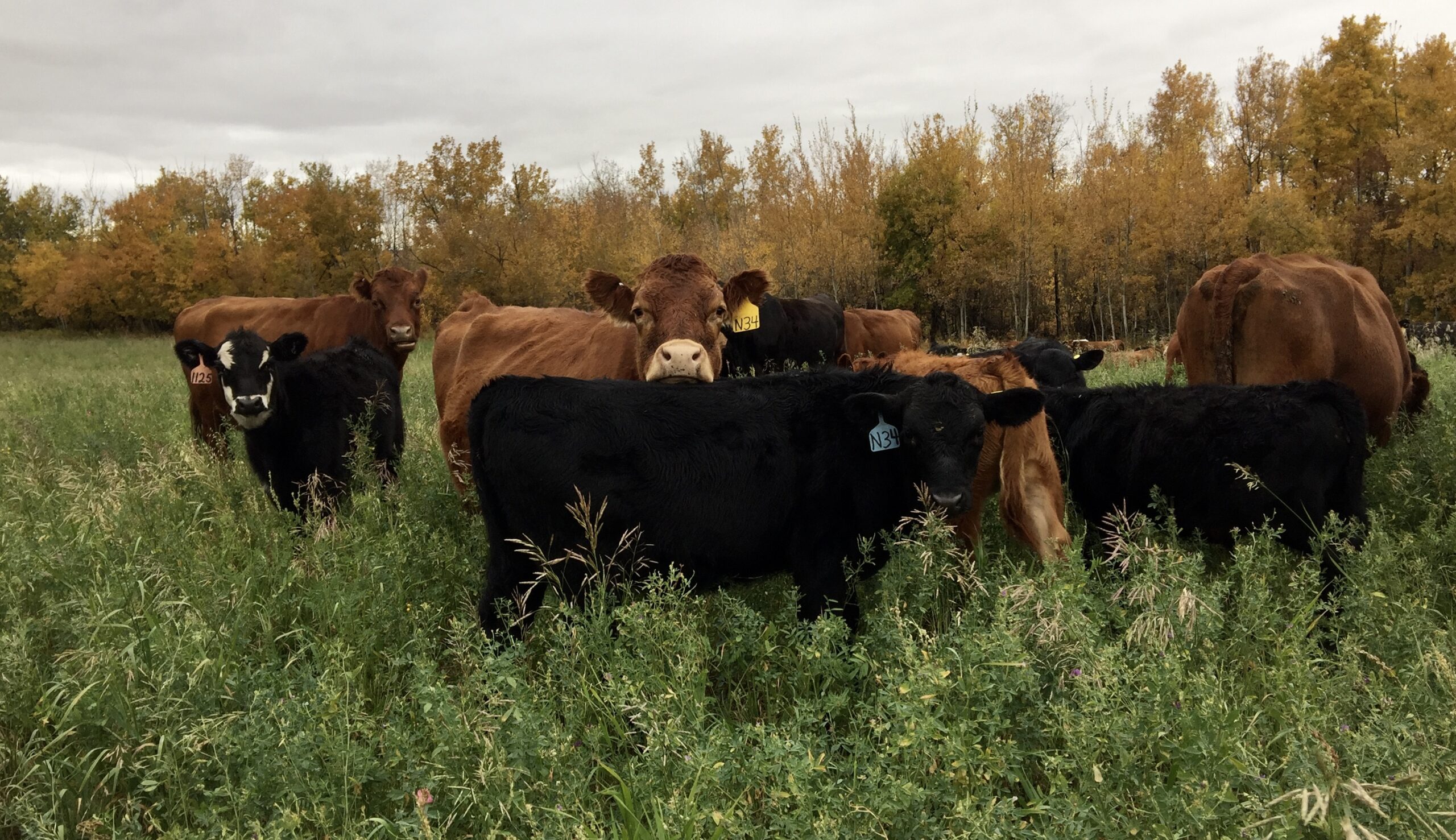
cattle
Can cattle swim?
Yes, they can. They’re not the best swimmers and can drown if the water is too fast and dangerous for them to swim in (just like with you or your pet dog, for instance), but they know how to do the “doggy paddle” and keep their heads above water to safely get across a river.
Cattle don’t like to swim all that much—they’d rather stay on dry land for as long as possible, submerging themselves belly-deep only on really hot days in a pond or lake or staying by the river’s edge where some tasty vegetation may be had—but they’ll do it if they have to. You won’t find them swimming across a great lake or an ocean, though; they’re not whales!
How are cattle slaughtered?
Cattle are slaughtered first by a bullet or cap-bolt shot through their skull into their brain to initiate unconsciousness or death. If using a cap-bolt gun, the animal will be knocked unconscious. A very sharp knife then must be used to cut the cartoroid artery/jugular vein to get rapid and immediate bloodloss, which ensures death, the blade cutting across the soft tissue under the jaw.
The animal is then hung by its hocks to let more blood leak out, and the gutting process begins, first by starting skin the hide off starting from the belly and working outwards to towards the legs, anus/tail, and head. The head and legs (up to the knee and hock joints) are removed, and skinning continues until the hide is completely removed. Once the hide is off, the stomach lining is carefully cut revealing the offal (insides like stomach, intestines, kidneys, lungs, etc.). This and the anus is removed, being careful to not tear or knick any intestinal membranes and contaminate the meat with fecal or digestive matter. All is also done with very sharp knives to make the process as quick and smooth as possible.
Once complete, the carcass is weighed (optional) halved, and stored in a cool room for a couple of weeks before being cut up into different cuts of meat.
Are cattle native to North America?
No. Cattle are not native to North America. They are native to Europe, Asia, and parts of Africa.
Can cattle get rabies?
Yes, cattle can get rabies. They, like any animal, typically get rabies from a bite by a rabid animal or if saliva from a rabid animal gets into an open wound, a sore, or mucousal membranes. Symptoms may not show up for weeks or months, but once they do, it’s too late to save them. After symptoms progress (often rapidly) over 7 to 10 days, they die.
Symptoms include frothing at the mouth or drooling due to inability to swallow, sudden aggression or loss of fear/unusually and suddenly quiet, unsteady gate, weak hindquarters, muscle spasms and strange bellowing.
Are cattle cows?
“Cattle” is a general term that encompasses all bovine animals of the species Bos taurus. This means bulls, cows, heifers, steers, and calves.
Therefore, no, cattle are not cows (mature female bovines that have had a calf). But cows are cattle.
Are cattle prices going [up or] down?
Cattle prices are subject to change. Since this is not a cattle pricing site, but more of an information site that contains information that is relatively unchanging over the years, I can only provide an answer dated the date this answer was written (August 19, 2026).
Quote is from Google AI, covering both Canadian and American markets of the latter half of 2026:
Cattle prices are easing down in the short term after reaching record highs, but they remain historically strong overall.Short-Term Trends (Going Down):
- Futures and Cash Prices: Live cattle and feeder cattle futures recently dropped due to packing plant closures, plant slowdowns, and market volatility. [week of 08/10/26]
- Recent Dips: Live cattle futures fell to around $218–$223 per hundredweight (cwt), and lightweight feeder calves saw minor price corrections from previous peaks. [week of 08/10/26]
Long-Term Outlook (Staying Strong)
- Tight Supply: North American cattle herd sizes remain near multi-decade lows, keeping overall market fundamentals tight.
- Future Projections: Analysts expect prices to stabilize or climb again later in the year and into 2027 as herd rebuilding moves slowly and beef demand stays steady.
Can cattle eat clover?
Yes, cattle can definitely eat clover, and they enjoy eating clover. Too much clover can be detrimental, causing frothy bloat, which is why farmers and ranchers will feed or graze clover with grass. Clover is often fed in hay or silage form. When fed as a mix, grass often makes up at least 60% of the clover-grass feed mix.
What does "cattle" mean?
Originally in Old Norman-French, the word “cattle” was catel, meaning property or “chattel.”
Over time, the meaning shifted to refer strictly to large, domesticated, hoofed ruminant animals including cows, bulls, steers, heifers, calves, and oxen that are raised on farms and ranches for meat, milk, and leather.
“Cattle” is a plural-only noun. In other words, if you were to write, “There’s a cattle,” or ask, “What does a cattle eat?” this would be grammatically incorrect. Instead, you should say, “There’s some cattle,” or ask, “What do cattle eat?”
Are cattle and cows the same?
No. Cattle is a plural-only noun that refers to all large bovines of Bos taurus and its related subspecies, and includes cows, bulls, heifers, steers, oxen, and calves.
Cows, on the other hand, specifically refer to mature female bovines that have had a calf.
People erroneously colloquially use the word “cow” or its plural form “cows” to refer to all cattle, which is problematic when pointing out a herd of bulls or steers. From the author’s observations, the people most likely to use the term “cows” over “cattle” are those with a strong urban background.
Can cattle get Lyme disease?
Not exactly. While they can get infected by ticks that carry the bacterium Borrelia burgdorferi, which causes Lyme disease when they bite, rarely do they show clinical symptoms. Blood tests will show antibodies, but true clinical infection in cattle is uncommon compared to other animals like dogs and horses.
If cattle show symptoms of Lyme disease, they are mild or even undetectable. These include lameness, stiff joints, swollen or painful joints, mild fever, weight loss, and reduced milk production. Farmers may attribute these symptoms to other possibilities and may not consider them to be Lyme disease. Only a blood test will confirm or deny such suspicions.
Are cattle colour blind?
They are partly colour-blind, specifically red-green colour-blind. They can see only blues, yellows, browns, and greys. This is called dichromatic vision.
Can cattle eat alfalfa?
Yes. Cattle can and love to eat alfalfa. It is a popular forage species grazed or fed with grass (sometimes fed alone, but this can be risky because it can cause frothy bloat) to lactating beef cow-calf pairs, growing cattle, or dairy cattle.
Both clover and alfalfa are in the same family (Fabaceae). Alfalfa is often fed along with grasses like timothy, bromegrass, fescues, or wheatgrasses.
Alfalfa is most commonly harvested for hay, less so for baleage or silage. It is also commonly grazed; however, producers are often wary about putting their cattle on it because of bloat issues.
Alfalfa is highly digestible in the rumen, meaning that rumen bacteria can rapidly break it down. This creates tiny gas bubbles that trap gases normally released through belching (eructation). As more alfalfa is digested, more bubbles form, causing painful distension of the rumen walls. Thus, a cow is “bloated” because her stomach looks bigger than it should. She will stop eating and just stand around, trying her hardest to burp to no avail. If a farmer or rancher doesn’t intervene quickly enough, she can suffocate from the inside and die (the rumen puts more and more pressure on the lungs, causing her to not be able to breathe properly, a.k.a asphyxiation).
The trouble is, alfalfa is very high in protein, which makes it very desirable for growing cattle and cows in milk. Therefore, producers have learned to introduce alfalfa slowly into the diet and always watch for bloat. This is why many farmers and ranchers feed or graze alfalfa along with non-bloating plants like grasses, which alleviate the considerable risks of bloat compared with feeding straight (nothing but) alfalfa hay.
How do cattle produce methane?
Methane (CH4) is not produced by cattle. Instead, it is produced in the rumen of cattle. Rumen bacteria produce it as a gaseous byproduct of anaerobic (no oxygen) cellulosic digestion, and cattle release it when they burp.
Where are cattle kept?
Cattle are kept on farms and ranches. On those farms and ranches, they may be raised outdoors in dirt corrals or grassy pastures, or housed in barns.
Where do cattle live?
Cattle live on farms and ranches.
Can cattle lice transfer to humans?
No. Cattle lice are host-specific, meaning they prefer to live and reproduce only on the skin of cattle. They cannot infest, bite, or survive on human skin.
For humans to get lice, they must contract human-specific lice from another louse-infected person.
If handling cattle that are heavily infected with lice and some jump on your clothes or skin, never fear because those tiny critters will quickly die or leave because it cannot attach and feed on its “new” host.
Can cattle and sheep graze together?
Cattle and sheep are often successfully grazed together, creating what graziers call a “flerd.”
Cattle have been grazed with sheep for thousands of years, but for some reason, in the last couple of centuries, people have avoided the concept (or dared combine their beloved beef stock with those pesky grass-hogging “range maggots”) because of cultural prejudices between cattle herders and shepherds.
Cattle can be aggressive to sheep if they’re not raised with them, and both parties will need time to adjust to each other before being grazed together. But since both are quite peaceable and social animals, the grace period doesn’t take long, and cattle and sheep can get along famously. Cattle may also be considered decent protection for sheep against predators, if they are fairly closely bonded.
Are cattle drives still a thing?
Yes, but not to the extent they were in the mid-19th century, before the invention of cattle liners and cattle handling facilities. Cattle drives today occur over shorter distances: over a few miles rather than several, taking a day or two (or an hour or more) rather than months.
Because of vast networks of busy roads, barbed wire fences, and far more farmland compared with 150 years ago, cattle today need to be hauled on cattle liners (or “haulers”) over long distances rather than on horseback or four-wheels. Few large ranches exist today where cattle can be driven over a few days from home place to summer grazing range by cowboys and cowgirls.
Can cattle see in the dark?
As long as there’s dim light from moonlight, stars, or remaining light from dusk or dawn, they can see well in the dark. However, if it’s pitch-black dark, they need to rely on their sense of smell and hearing to find their way around, as they cannot see in pitch black.
Can cattle see colour?
Yes, but not the entire colour spectrum. Cattle are dichromatic, meaning that they can only see blues, yellows, browns and greys. They are red-green colour blind, meaning reds and greens appear brown and grey to them.
Which cattle breed is best for meat?
Angus (or Aberdeen Angus) has been successfully marketed as the best breed for meat due to its marbling and tenderness.
However, lots of other beef breeds are excellent for beef. Waygu, for instance, is far more highly valued due to its far higher marbling and very, very tender texture. It’s very expensive for a reason. Waygu is basically “beef” in Japanese, and comes from a variety of Japanese breeds that are specially raised and fed to produce highly marbled, expensive beef.
Other breeds that produce leaner beef include Charolais, Simmental, Salers, Maine Anjou, Blonde d’Aquitaine, and Gelbvieh.
Hereford, Shorthorn, Devon, Jersey, Dexter, Brahman, Brangus, Braford, Galloway, and a host of others produce beef that is arguably as good as Angus beef.
Thus, it depends on marketing and other indirect contexts for raising these animals like ease of handling/temperament, growth rate, bodyweight at slaughter (not everyone wants to raise big cattle for meat), and feed conversion efficiency (i.e., can this breed do well on forage only or does it need grain regularly to put on fat and marbling). These will ultimately determine what breed is best to raise for beef.
But basically, as an old farmer put it, “once the hide comes off, they all start looking the same.”
Are cattle mutilations still happening?
Sadly yes, they’re still happening. There were (are) some high profile cases in Texas and Utah in 2023 and 2025, respectively. From Google:
- Texas (2023): Deputies in Madison, Brazos, and Robertson counties investigated seven cows found dead with clean, precise cuts around the mouth and removed tongues. The Guardian covered how these animals showed no signs of struggle or spilled blood. [1]
- Utah (2025): The Utah Department of Agriculture investigated a livestock carcass in Carbon County with unusual mutilation signs that ruled out natural causes or gunshot wounds. [2]
- Oregon (ongoing): Ranchers in Harney County continue to report unexplained livestock deaths, which inspired a regional documentary highlighted by OPB in 2025. [3]
The science says that these are quite possibly not mutiliations from aliens, cults, or secret government projects, but purely biological in that birds and insects are causing soft tissues to “disappear” post-mortem like innards, tongues, eyes, mouth, and genitals. These soft tissues are the first choice for scavengers.
As the skin dries and decays after death, it pulls tight around the missing tissue. This makes scavenger bites look like straight, surgical scalpel lines. Finally, dead animals have zero blood pressure, meaning post-mortem wounds do not bleed. Any remaining blood inside the body pools and coagulates naturally.
Can cattle get strangles?
No. This contagious respiratory disease caused by the bacterium Streptococcus equi only affects equines (horses, donkeys, and ponies), not cattle.
Can cattle get Chronic Wasting Disease (CWD)?
The form of Chronic Wasting Disease that cattle get is called Bovine Spongiform Encephalopathy (BSE), which is a bovine form of this neurological wasting disease.
That said, the specific form of CWD does not naturally transfer from cervids (those animals most likely to contract CWD) to bovines under natural field or farm conditions. This is after studies done where cattle were fed infected material or that lived in heavily infected areas did not get sick from the disease [Source]. There is a strong enough species barrier between cervids and bovines that bovines cannot contract CWD.
Can cattle get mange?
Yes, they can get mange. There are four types of mange that occurs in cattle:
- Sarcoptic Mange, also called “barn itch,” is caused by burrowing mites (Sarcoptes scabiei) that cause intense itching, thick crusts, and major weight loss. [FarmHealthOnline, GOA, WCVM SK]
- Demodectic Mange is caused by follicle mites (Demodex bovis) that can create small nodules or bumps in the skin. [FarmHealthOnline, TAMU EDU, VCAH, HermonSlade, INaturalist]
- Heavy rubbing and scratching against fences or posts
- Patchy hair loss
- Thick, scaly, or crusted skin
- Weight loss or lower milk yield due to stress and irritation
- Worse symptoms during late winter or when housed indoors
Can cattle eat apples?
Yes, cattle can and love to eat apples. The caution is that sometimes an apple may be too small for them to chew, and they risk choking. Most of the time it’s best if an apple is cut in half before being fed to minimize choking, especially if given as a treat. Large apples make cattle chew them more as opposed to smaller apples.
Can cattle eat potatoes?
Yes, cattle can eat potatoes. They are sometimes fed as part of a TMR (total mixed ration) as they are a very starchy feed full of energy which is important for milk fat or putting fat and marbling on the meat of feeder or finisher cattle, but need to be limited-fed because too much fed can cause digestive upset like bloat or acidosis.
Can cattle eat comfrey?
Yes. Comfrey are very high in protein and can provide a high-protein source of feed or grazing food source for them. However, it cannot be fed alone because it can be too rich, and will need to be fed as a “supplement” along with their regular feed.
How do cattle auctions work?
Sellers bring their cattle to the auction mart where they are classed according to weight, sex, coat colour, and age. If the group of cattle that came in are not uniform, workers separate them into groups of similar weight, age, and sexes, and coat colour if this is a significant selling point for buyers.
There are cutter and canner cows (cull cow categories), cow-calf pairs, bologna bulls, bred heifers, feeder heifers, feeder steers, and young calves (often dairy bull calves). Heifers and steers are organized according to their weights, from 400-500 lb up to 1200 lb, in increments of about 100 pounds (e.g., 800 lb steers are separate from 900 lb steers). Many auctions will also separate cattle according to coat colour: so, black steers are put together separate from brown/red steers, spotted cattle separate from solid-coloured cattle. It makes it easy for buyers to know what they’re buying.
Once the auction starts, the “pod” of cattle or single animal is moved into the auction ring and buyers begin to “bid” on them.
The auctioneer sets a price and the price will go up by increments of $2, $5, or $10 (as $/cwt or “hundred-weight” or 100 lb) by “bids,” and this depends on how many are bidding and how eager the bids come in. If nobody wants to bid at a certain price (let’s say, he sets it higher than what buyers want to bid on), the auctioneer drops the price until buyers want to start bidding, then the price pops up incrementally. Bidding stops when only one buyer or bidder is left with the highest possible bid or price ($/cwt), and the single animal or pod of heifers or steers are called as “sold.”
How do cattle guards work?
Cattle guards are basically heavy steel gates that are set horizontally (as opposed to vertically like a typical gate) across a pit about 2 to 3 feet deep. The heavy steel pipes are 4 inches wide and spaced 4- to 6-inches apart. Vehicles like trucks, cars, ATVs and semis can easily drive across, but cattle, horses, bison, and most other large ruminants find it next to impossible to walk on them (deer and moose can easily jump across, however).
Some people say that it acts mainly as a psychological barrier as the dark pit and the thick steel pipe set across make it look like an impossible black hole that cattle don’t want to cross. However, even if a stubbornly stupid cow (or horse) does try to cross, they will get their legs stuck in between the pipes, stopping their attempted escape. Plus, the large pipes make it too slippery and unstable for them to stand, let alone walk, on.
Also, if you were to try to walk across the pipes yourself, you would also find it incredibly difficult to find a firm footing without risking having your foot fall in between the pipes and spraining an ankle. People can cross it, but have to do so carefully by watching their step. That’s why cattle guards placed in protected natural areas have a flat piece of iron on one side to help hikers safely cross and minimize risk of injury.
How is cattle feed made?
It depends on the feed itself. Cattle are fed a variety of feeds, and most each feeds are made in a variety of ways, all which cannot be described here.
That said, we can cover the most common feeds: Hay, silage, and grain.
Hay is grass and/or legume (like alfalfa or clover) that is cut into swaths by machines like haybines, mowers, or swathers, and allowed to dry and cure in the sun over several days. The swaths are sometimes rolled together with a rake (a machine pulled by a tractor) when ready to bale. Then the baler comes to gather up the swaths and pack them together into “bales.” These bales may be round or square. Bales are left out to “sweat” for a few weeks before being gathered up and shipped back to the farm yard, where they are fed to livestock.
Silage is also grass and/or legume (like alfalfa or clover) or annual crops that is cut into swaths by machines like swathers or haybines, but instead of allowing them to cure for a few days, they are picked up by a silage harvester and chopped into small pieces. These pieces are blown in a silage truck until full, and the silage truck driver takes his load to a designated “pit” or similar where it gets unloaded. The process is repeated until either the field is harvested or sufficient silage has been harvested for the cattle herd. In the meantime, a large tractor is used to push these piles together into one big pile, and drives on this pile to pack it down as much as possible. This forces any oxygen bubbles out. The tractor driver has to do this repeatedly until he feels that the pile has been sufficiently packed down, continuing to pile and pack as trucks deliver more loads. The pile is then completely covered in a thick plastic tarp, and the tarp weighed down so the wind doesn’t pick it up and blow it away. Underneath this tarp is when the magic happens. The chopped feed underneath, now in anaerobic conditions, ferments, turning fresh green feed into basically pickled feed that can keep, if kept protected, for months.
Grain is harvested from annual cereal crops like barley, oats or corn. The plants need to be fully mature (basically, dead and gone to seed) before being harvested. A combine-harvester comes along and cuts the plants down and threshes them, separating the hard seeds from the rest of the plant. Seeds are stored in a separate compartment on that combine while the straw and chaff are blown out back onto the field. Once the combine is full, a truck comes to take the load and ship it to a storage facility (grainery) for it to sit until it’s time to be used for feed for livestock.
How are cattle slaughtered in Australia?
Cattle are slaughtered in Australia the same way that cattle are slaughtered in the United States and Canada. See the question, “How are cattle slaughtered” above for details.
What cattle are used for beef?
All cattle—cows, bulls, heifers, steers, and oxen—can be and are used for beef.
The most popular type of cattle used for beef are steers (castrated male bovines). Heifers, cows, and bulls, in that order are less popular for beef because all three are usually prefered as breeding stock above being grown and fed for meat production.
What cattle have horns?
Cows, bulls, steers and heifers can have horns. Calves are generally too young to have horns, however horn buds start to form a few days after birth, and horns begin to be solid protrubences by the time they’re a few months old.
What cattle breed is known for its large horns?
Ankole-Watusi is the breed with large horns with a very wide circumference and massive base thickness.
Texas Longhorn are best known for having very long horns, stretching 7 to 10 feet from tip to tip in record-holding animals.
What cattle are native to North America?
No cattle are native to North America.
What cattle produce the best beef?
Younger stock tend to produce more tender, better marbled beef than older animals. This is why most cattle are finished and slaughtered between 10 to 24 months of age. Steers tend to have less lean beef compared to bulls, and there’s almost no difference between heifers and steers.
Where have cattle originated from?
Cattle originate from various parts of Europe, Asia, and Africa.
What cattle farms does McDonald's own?
McDonald’s does not own any farms or ranches. It buys its beef from big corporations like JBS, Cargill, and Tyson Foods. These companies get beef from thousands of farms and ranches worldwide.
What cattle feed is high in protein?
There are numerous feeds that are high in protein. These include:
- Legume feeds (alfalfa/clover: hay, cubes, pellets, pasture fodder, etc.)
- Canola meal
- Soybean meal
- Peas (grain)
- Pea straw
- DDGS (dried distiller’s grains) wheat
- DDGS corn
- Brewer’s yeast
- Sprouted grains
- Cottonseed meal
What cattle does Waygu beef come from?
Waygu beef come from specific Japanese breeds that have been bred and raised for extremely high marbling characteristics. No other European, Asian or African breeds have this or can compete with this.
What do cattle eat?
Cattle eat a mix of grasses, broad-leafed plants (forbs), and tree and shrub leaves. They are most well known for eating grass and broad-leafed plants.
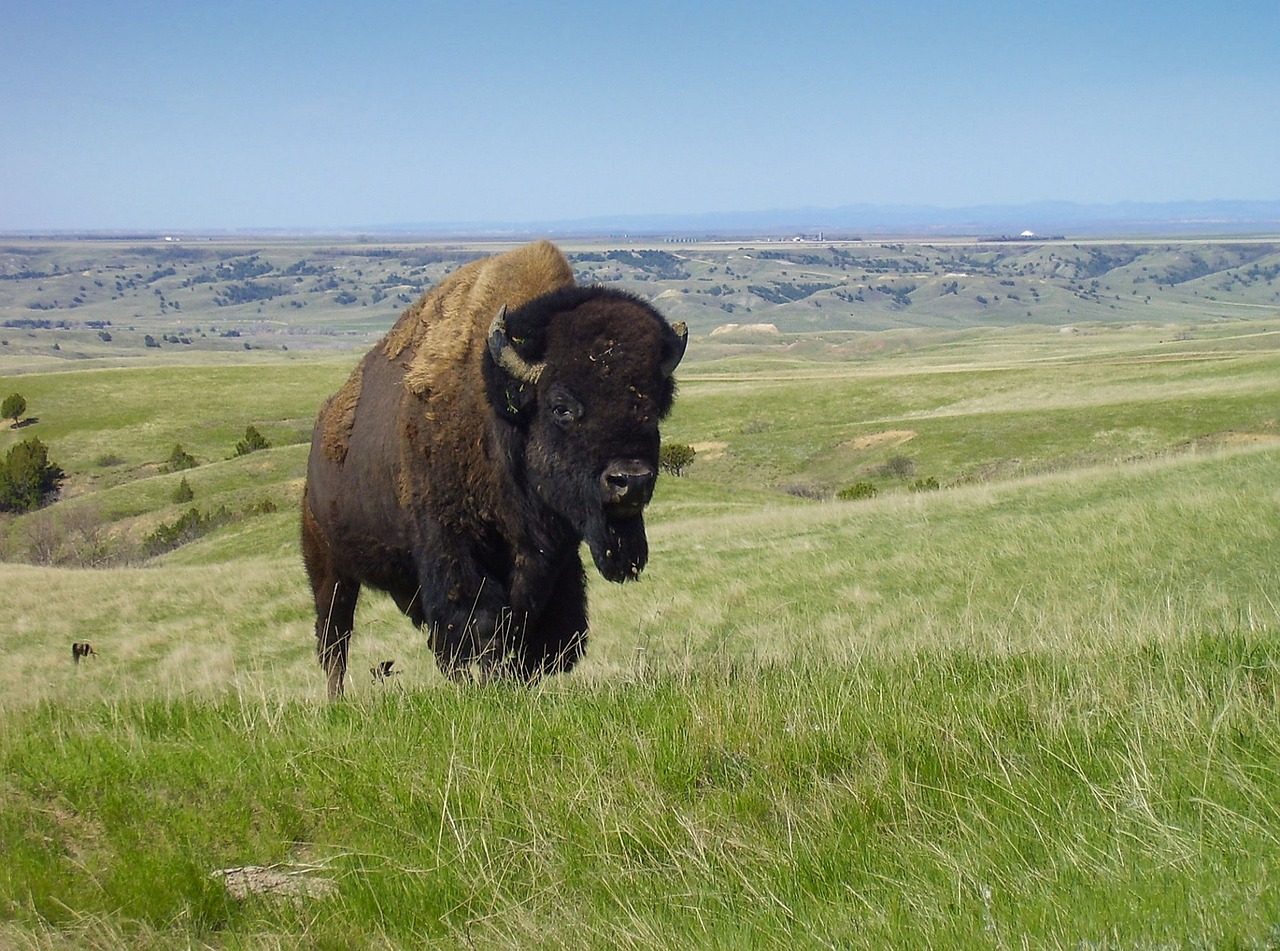
bison
Are bison extinct?
No. Bison as a whole are not extinct. You can still find two major bison species in the world today. These are the American Bison (Bison bison encompassing two subspecies: the Great Plains Bison – B. b. bison) and the Wood Bison – B. b. athabascae), and the Wisent/European Bison (Bison bonasus).
However, there are several extinct bison species such as the mighty Longhorned/Giant Bison (Bison latifrons), the Ancient Bison (Bison antiquus), the Steppe Bison (Bison priscus) and Bison occidentalis.
Are bison and buffalo the same?
Bison and buffalo are interchangeable when specifically referring to the American Plains and Wood bison. This is because white European explorers, upon coming across these great dark beasts for the first time, could only consider their relation to that of the Asiatic and African buffaloes, hence the name stuck, both among the First Nations people and the millions of descedants of the first European settlers.
However, in a very strict non-colloquial sense, no they’re not the same. Bison refer specifically to the large, very hairy humped bovids that historically roamed much the North American grassland plains (as well as their endangered close cousins in Europe, the Wisent), whereas buffalo refer to the less hairy, smoother-backed, larger-horned bovids that call Asia and Africa their native homeland: Asian Water Buffalo (Bubalis spp.) and the African Buffalo (Syncerus caffer).
Are bison endangered?
No, bison are classed as Near Threatened by the IUCN (International Union for Conservation of Nature). This goes for all bison species today: the Wisent (Bison bonasus) and both American Bison subspecies (Bison bison bison [Plains bison] and Bison bison athabascae [Wood Bison]).
North America has about 500,000 bison, with most living on private ranches and farms (about 192,000 in the U.S. and nearly 150,000 in Canada), while roughly 31,000 to 35,000 make up wild and conservation herds on public and tribal lands.
Are bison aggressive?
Bison are generally placid and peaceful animals; more interested in grazing and hanging out while they chew the cud over trying to trample anyone or anything over. However, they’re wild animals, and need to be treated with the utmost respect, like they have the potential to be aggressive in barely a moment’s notice. This is why you’ll have park rangers wanting you to keep a safe distance from any bison(~100 yards), or to just simply stay in your vehicle if being “too close” is unavoidable.
Bulls and cows with calves have the most potential for aggression; bulls, during rut, and cows, when they have young calves to protect. Bulls on the rut will charge and run at almost anything that moves, whereas cows will charge if they think you’re getting to close to her baby.
Thus, while bison are not deliberately aggressive, please treat them like they are. That way you avoid the embarrassment of becoming the next subject of Internet memes when someone captures you being flung 10 feet into the air by an “angry” bison.
What do bison eat?
Bison eat mainly grass and sedges. Unlike cattle, a bison’s diet is largely made up of grasses (~98%) and they often will avoid consuming most broad-leafed plants, turning to them possibly only for self-medicating purposes.
Are bison herbivores?
Yes. A bison’s diet is made up of plants.
Are bison bovine?
Bison belong to the Family Bovidae and Subfamil Bovinae which biologically and taxonomically makes them bovines. However, they are cousins to domestic bovines (cattle; Bos taurus), so shouldn’t really be called bovines like their domesticated cousins sometimes are.
Are bison related to cows?
Yes, bison are closely related to cows/cattle. They share the same taxonomic family (Bovidae) and subfamily (Bovinae), and can interbreed to produce fertile offspring. Somewhere some 2 or 3 million years ago, the bison and bovine lineage split, with domestic cattle tracing their heritage back to the wild auroch (Bos primigenious) and bison to the Steppe bison (Bison priscus).
Can bison and cows/cattle breed?
Yes, they can interbreed. This was discovered as early as 1749, when cattle from southern British colonies in America were accidentally mixed with wild roaming bison, resulting in surprise (and probably confusing) bison-cattle crosses.
Crossbreeding was recorded as intentionally done in 1815 by Robert Wickliffe of Lexington, Kentucky. In 1880, Colonel Samuel Bedson of Stoney Mountain Penitentiary crossed eight bison (bought from a captive herd of James McKay) with Durham cattle. More crosses were done in different parts of America and Canada as you can read in this Wikipedia article.
Research into breeding cattle with bison found that breeding bison bulls with cows produced less-than-desirable results, but breeding a domestic bull with bison cows solved the problem. The female offspring proved fertile, but the males less so.
Today, through breeding effots the “Beefalo” breed was developed, which contains 5/8ths Bos taurus and 3/8ths Bison bison.
Can bison swim?
Yes, if they need to cross a lake or river to get where they want to go, they can do so with ease.
Can bison be domesticated?
Many people have tried to domesticate the wild bison, but most efforts have failed.
Native Americans never successfully domesticated bison. Later European attempts at domestication before the 20th century had limited success. Bison were described as having a “wild and ungovernable temper”[1]; they can jump close to 1.8 m (6 ft) vertically, and run 55–70 km/h (35–45 mph) when agitated. This agility and speed, combined with their great size and weight, make bison difficult to confine, as they can easily escape or destroy most fencing systems, including razor wire. The most successful systems involve large, 4-metre (10 ft) tall fences made from welded steel I-beams sunk at least 1.2 m (4 ft) into concrete. Tall, solid-sided handling systems discourage bison from trying to see beyond the fence and attempt escape. Bison farms must also install a tall paige-wire “game fence” over 8 ft (3.5 m) tall and steel fence posts just to pasture bison.
Are bison native to North America?
Yes. Bison are regarded as the largest land mammal native to North America.
Are bison dangerous?
If they’re left alone and you keep your distance, they’re not dangerous. But if you get too close to them, where they feel like you’re invading their “comfort bubble,” or do anything to provoke them, they can and will turn dangerous at a moment’s notice. Bison can get curious and may wander close to check you out, but that doesn’t mean you should allow them to get closer to you, or even go up to one to try to pet it! Bison are among the most dangerous animals visitors encounter in different natural areas in North America, so yes, bison are dangerous.
This is why bison should always be treated with the utmost respect if you happen to get in close proximity to one or several in any natural area they live in. Always stay at least 100 yards away, or stay in your car if you want to get close and take pictures and videos of them.
There have been many cases of people being tossed, trampled, or gored by so-called “angry” bison who were just reacting because those people made the bad judgment in thinking they’re not all that dangerous, mistaking their slow, lumbering movements to mean that they’re going to be easy to outrun and out-maneuver. If provoked, they can easily outrun you, going as fast as 60 to 70 km/h (40 to 45 mph). Gunshots don’t startle them, either.
Are bison endangered in the USA?
Bison are no longer endangered. However, the International Union for Conservation of Nature (IUCN) rates them as near threatened in the United States.
Are bison endangered in Canada?
Bison are no longer endangered. However, the International Union for Conservation of Nature (IUCN) rates them as near threatened in Canada.
Are bison cows?
No. While bison are distant cousins of “cows” (domestic bovines, also called cattle) and are genetically closely related because they share the same taxonomic family (Bovidae) and subfamily (Bovinae), they are not cows or cattle.
However, park rangers in national parks like Yellowstone National Park in the United States have fun with urbanites who think (and call) those big, dark, slow-lumbering bovids they see “fluffy cows.” The USDA National Park Service once posted a tweet on X (formerly Twitter): “Don’t pet the fluffy cows!” when they, yet again, cautioned people about such idiot behaviour after having to deal with yet another incident of someone getting flung or gored when trying to lay their hands on a wild bison!
Why are bison endnagered?
Bison are no longer endangered. The IUCN (International Union for Conservation of Nature) lists them as near threatened. However, they were pushed to near extinction in the late 19th century.
This was due to deliberate overhunting (more like mass-slaughter) by the U.S. government as a means to sabotage the central resource of many First Nation tribes of the Great Plains for the purpose of undermining their cultural heritage and weakening their militia-like forces that had been successful in raiding various white settler encampments and settlements. The “success” (for the US government, that is) meant devastating spiritual loss and loss of morale for many tribes, as they considered the bison the “first people” that the Creator guaranteed them as an integral part of their lives. Species extinction was a non-existent concept for them.
Hunters hired by the US government tasked the men to shoot and kill any and all bison—bulls young and old, cows young and old, yearling heifers, and even calves. By the time the mass slaughter ended (it started in 1870 and ended around 1880), only about 100 individuals remained; these split into six herds: five managed privately by ranchers, and the sixth by the New York Zoological Park (now the Bronx Zoo). A seventh wild herd of 25 individuals survived and was kept in Yellowstone National Park (founded in 1872).
Efforts by various First Nations tribes working together to breed bison (and address the population bottleneck problem created by very limited founder herds) and white-settler ranchers have helped restore bison populations, and today there are an estimated 500,000 bison across North America as of 2017.
Can bison jump?
Yes, bison can jump. They’ve been recorded to be able to jump 6 feet (2 m) from a standstill.
When did bison go extinct?
Never. Bison have never gone extinct. However, they were pushed to near-extinction in the 1880s across North America (and Europe) by overhunting.
Where do bison live?
Today, most bison live on large, expansive ranches covering grasslands or a mosaic of tame grassland and forest. Other bison herds live in national parks such as Yellowstone, Wood Buffalo, Grasslands, Elk Island, Antelope Island, Custer State Park, Wind Cave, Prince Albert, and others in the United States and Canada.
Where are bison found?
Bison are found on various private ranches and national and state parks such as Yellowstone National Park, Grasslands National Park, Banff National Park, Prince Albert National Park, Wood Buffalo National Park, Elk Island National Park, Custer State Park, Wind Cave National Park, Henry Mountains, Book Cliff, and others.
Are bison and American buffalo the same?
Yes, they refer to the same species.
How many bison are left?
As of 2017, the bison herd has grown to 500,000 across both Canada and the United States since their near-extinction in c.1880.
What bison went extinct?
The following bison species have gone extinct:
- Giant/Long-horned Bison (Bison latifrons): extinct estimated 20,000 to 30,000 years ago
- Ancient Bison (Bison antiquus): extinct estimated 10,000 years ago.
- Steppe Bison (Bison priscus): extinct about 11,700 years ago.
- Bison occidentalis: estimated extinct around 10,000 years ago.
- Bison schoetensacki: estimated extinct around 500,000 years ago.
Where to buy bison?
For bison meat, your local grocery store may carry bison steaks or burgers. Organic grocery stores are often a good place to buy. Also check out farmer’s markets and search Google for local bison ranches to contact to see if they’re willing to sell enough bison to fill your freezer.
For bison animals, if you’re looking to start your own bison ranch, contact local bison ranchers willing to part with some yearlings or auction marts that sell bison animals to add to your herd.
Can bison get mad cow disease?
There are no known cases of bison contracting Mad Cow Disease or BSE (Bovine Spongiform Encephalopathy), as they are distant enough cousins from cattle to not be naturally susceptible to the fatal disease. Bison (more rather, bison producers) are more affected by trade restrictions and border closures.
Can bison be tamed?
Yes, but they have to be started when they’re very young. It’s next to impossible to tame older animals, like yearlings or adults. It also depends on the individual animal, too. Some animals are going to be easier to tame than others.
For the most part, though, bison are still wild animals and largely untamable.
Can bison jump 6 feet?
Yes they can.
How do you pronounce bison?
There are two ways you can pronounce “bison”:
- BYE-son – “standard” pronunciation for most people;
- BYE-zon – somewhat regional, as some parts of the United States and Canada prefer to use this pronunciation over the former above.
Who sells bison?
Bison producers sell bison.
Grocery stores and bison producers sell bison meat.
Why are bison called buffalo?
When early European explorers and French fur trappers saw these large, humpbacked animals in America and Canada, they couldn’t describe these animals better other than to use the name of the more familiar African and Asian “buffalo” (derived from the French word bœuf meaning “beef “or the Portuguese bufalo) to describe them, and the name has stuck ever since.
The name, of course, is erroneous because these North American wild bovines are distant cousins to the true buffalo (Bubalus and Syncerus), and the correct name is bison. However, the term “buffalo” has had such a massive cultural significance for over 300 years for both white settlers and First Nations people that it remains an important part of North American heritage, including place names, folklore, and stories of the Old West.
It is for this reason that it’s rare for anyone to wish to correct you when you call bison “buffalo.”
Will bison ever come back?
Bison are listed as Near Threatened by the IUCN (International Union for Conservation of Nature). This is due to recovery efforts done after these animals were pushed to near extinction in 1889 when the wild bison slaughter, mandated by the US government, was halted.
Thus, it is difficult to determine if bison will come back to the 40 to 60 million (numbers vary according to sources) animals that once roamed the Great Plains in vast numbers. The Great Plains is unrecognizable compared with 200 years ago, being so heavily fragmented by roads, pipelines, fences, millions of acres of annual crops, municipalities, railways, and industrial complexes, that it would be impossible for bison to roam in great numbers like they have in days of yore. At this stage of the game, the answer seems to be a plain and resounding, “no.”
However, with bison meat gaining popularity and the ecological importance of bison slowly gaining popularity compared with domestic cattle, we cannot conclude that such a possibility of their coming back is impossible. Their numbers likely won’t be like what they were, but the mighty bison has positioned itself to be such an important part of American and Western Canadian heritage that recovery efforts to increase the global bison herd population has not–nor will it continue to—falter.
Will bison attack humans?
They certainly will if provoked. By “provoked,” we mean getting too close to them, attempting to touch or pet the animals, teasing or instigating them, feeding them, and so on.
As the National Park Service said it best, “Do not pet the fluffy cows!“
Are bison ruminants?
Yes, bison are ruminants. Like cattle, they have three forestomachs (reticulum, rumen, omasum) plus one true stomach (abomasum).
Are bison megafauna?
Yes, bison are considered megafauna, with their large size (average 900 lb females; 2500 lb males) and importance on the grassland ecosystem.
Can bison survive in Africa?
No. The plains of Africa remain hot and dry, with no real snowy, cold winters. Bison are well adapted to very cold winters and tend to suffer in the heat in summertime, preferring to find places to cool themselves with their thick coat over their forequarters and head. The animals that live in Africa have evolved to tolerate a hot and dry or hot and humid climate, as well as the biting insects that come with it. Bison would suffer—and die—with the constant exposure to heat both day and night.
Can bison be milked?
Yes, but usually with great difficulty. They would have to be confined and hobbled to be milked. Or, young heifer calves would have to be raised around people and trained from a young age to not kick while being milked.
How do bison survive winter?
They have a thick coat over their head, shoulders and withers, plus they grow a winter coat over their thinner-coat hindquarters, which helps them withstand temperatures that dip below -40 degrees Celsius. Adults will use this thick mat of fur to face a snowstorm head-on (as opposed to rear-facing like cattle and horses tend to do) because their thick fur provides necessary insulation against the wind, cold, and driving snow.
They also can use their heads to move aside the thick blanket of snow to access grass and sedges below to eat. They generally have difficulty moving in deep snow, but can find areas with less snow to travel on. They will seek out sheltered areas as well during snowstorms, keeping the younger, more vulnerable animals in the middle and the adults on the outside, facing the fury of the snowstorm.
Can bison and cattle be raised together?
They can, but it’s generally not recommended. Bison are more assertive, faster, and more agile than cattle, and they can push cattle away from feed and water sources instead of sharing it, meaning more feeding spaces are needed than usual, and more management needed to watch cattle and make sure they’re getting the nutrition they need. Bison also need more robust, taller and more expensive fencing and handling facilities because they run faster, jump higher, and are more apt to attempt to escape than their distant domesticated cousins.
Can bison and cattle graze together?
While possible, it’s generally not recommended. Cattle have different dietary preferences than bison do and tend to be lazier and slower-moving across the landscape than bison. Bison like to move a lot, prefer more grasses and sedges, and like to have a larger area to graze than cattle do. Unlike cattle, bison typically don’t need much encouragement to move across the landscape and graze further from water sources, staying in a herd as opposed to spreading out. Cattle, by comparison, have a bad habit of splitting up and spreading themselves out across the pasture, not venturing far from water sources, and favouring areas closer to water sources over areas further away. Producers typically need to pasture cattle in such a way that encourages them to graze those far-away areas by employing temporary electric fencing and setting up mobile watering points.
Bison also need taller, stronger fencing to keep them confined, and generally are tougher to manage if grazed via electric fencing (a lot of training is involved to get bison to learn to respect the electric fence, as some bison producers have found). This makes the pairing incompatable.
It is, therefore, best to graze cattle and bison separately with their vastly different management needs.
Can bison live in hot weather?
They can, but not well. When it gets hot, they seek shade or swim in a lake or river to cool off. That thick coat over their forequarters can be a detriment in hot weather, especially if the hot weather is constant day and night for weeks on end.
Can bison be hunted?
Yes. Hunters need permission from government agencies in the form of tags, permits, or licenses to hunt bison, and in areas where hunting bison is allowed. First Nations usually have first dibs on hunting bison as part of their cultural heritage; this helps with population control, for example, if too many bulls in the herd could cause inbreeding.
Can bison be friendly?
No. Too many people have mistaken the bison’s slow, lumbering, near-lethargic gait for being “friendly” and nearly gotten themselves killed for it. More people have been injured by bison than by bears. People have been killed by bison attacks as well, though rare.
How big are bison?
Bulls stand 5.5 to 6.5 feet (1.7 to 2.0 meters) tall at the shoulder hump and measure 9 to 12.5 feet (2.7 to 3.8 meters) in total body length. They typically weigh between 1,500 and 2,000 pounds (680 to 910 kg), though large wild or captive individuals can exceed 2,400 pounds.
Cows stand about 4 to 5 feet (1.5 meters) tall at the shoulder and measure 7 to 10.5 feet (2.1 to 3.2 meters) in length. They generally weigh between 900 and 1,200 pounds (410 to 545 kg).
Where do bison roam?
Bison roam across grasslands and savannahs, and will roam in open forests as well, following old trails made by previous animals.
Where could I go to watch bison?
It depends on where you live. But the best places are in Canadian and American national parks, where you may have a chance (though it’s not guaranteed) to glimpse or watch bison. Yellowstone has always been a popular destination for tourists to find and watch bison, but other places include Grasslands National Park in Saskatchewan, Elk Island National Park in Alberta, Prince Albert National Park in northern Saskatchewan, Wood Buffalo National Park in Alberta (very remote, accessible only by airplane), Wind Cave National Park in South Dakota, and Blue Mounds State Park in Minnesota.
Where in the world are bison?
American bison are predominantly found in Western Canada, the Midwest, and the Western United States. Bison have also been introduced to Siberia. Wisent have been reintroduced into the wild in parts of Europe, including Bulgaria, Poland, Russia, and Romania.
Which bison has horns?
All bison have horns.
Who eats bison?
Anyone reading this answer to this question can eat bison. Bison is a very lean, tasty meat that anyone can eat.
Why bison meat?
Why not? Bison meat is very healthy, lean, high in protein, and low in fat. It’s a popular item for those who want red meat but without all the extra fat. It’s a lean competitor to beef, especially grass-fed beef.
Why is bison better than beef?
Bison is better than beef, purely in my opinion. Many would tell you one is not better than the other, but others who are against fatty meats would argue bison is better because it’s low in cholesterol and saturated fat compared with beef.
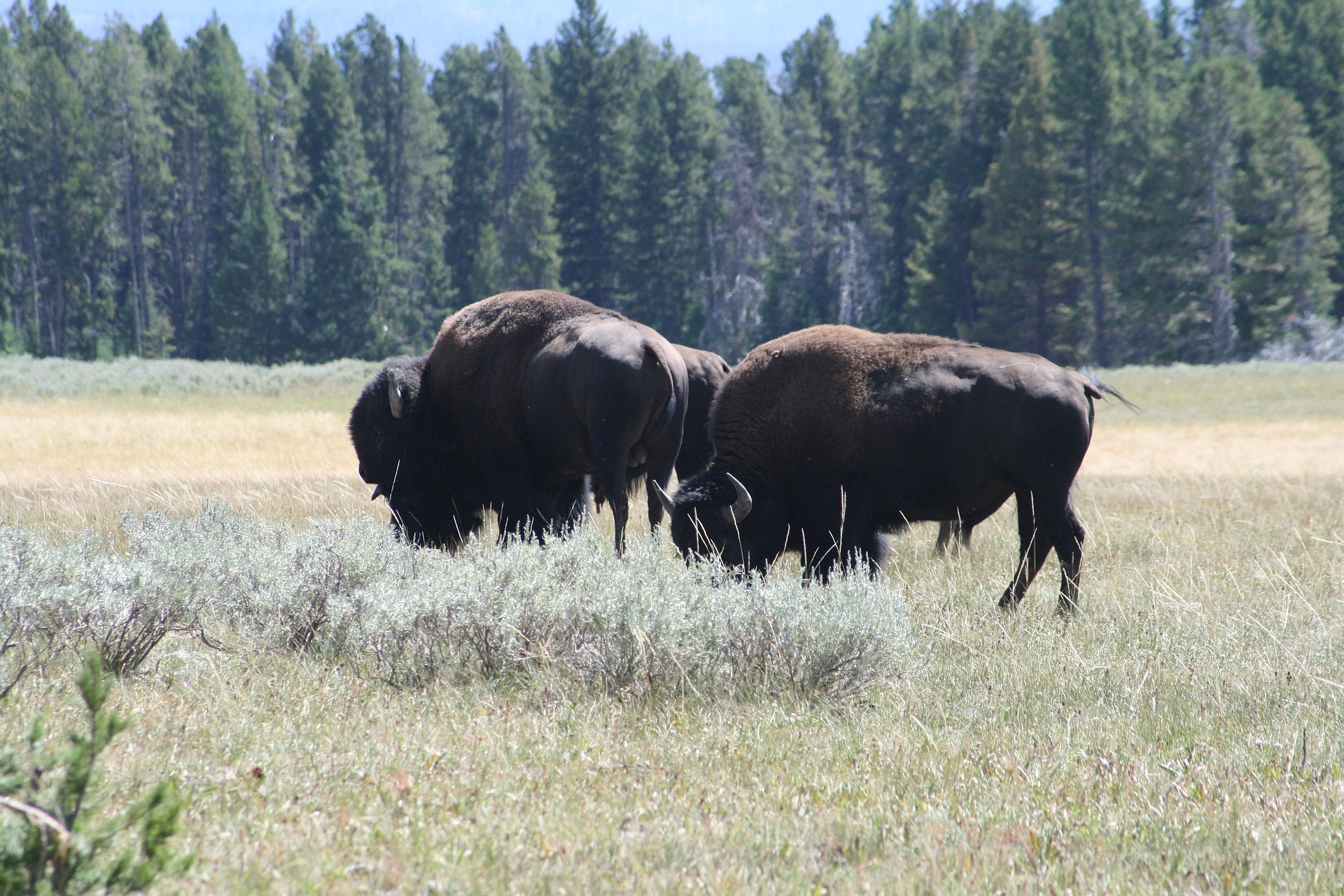
buffalo
Are buffalo extinct?
No. Buffalo (referring to bison) are commonly found in North America and parts of Europe. Pure buffalo—Asiatic water buffalo (Bubalus spp.) and African buffalo (Syncerus caffer) are still commonly found in Asia, Africa, and parts of other continents like North America and Australia.
Are buffalo and bison the same?
Bison and buffalo are interchangeable when specifically referring to the American Plains and Wood bison. This is because white European explorers, upon coming across these great dark beasts for the first time, could only consider their relation to that of the Asiatic and African buffaloes, hence the name stuck, both among the First Nations people and the millions of descedants of the first European settlers.
However, in a very strict non-colloquial sense, no they’re not the same. Bison refer specifically to the large, very hairy humped bovids that historically roamed much the North American grassland plains (as well as their endangered close cousins in Europe, the Wisent), whereas buffalo refer to the less hairy, smoother-backed, larger-horned bovids that call Asia and Africa their native homeland: Asian Water Buffalo (Bubalis spp.) and the African Buffalo (Syncerus caffer).
Where do buffalo roam?
American buffalo (or bison) roam on the plains, typically grasslands, savannahs, and sometimes forested areas.
Asiatic water buffalo roam in wet grasslands (grassy marshes, wet meadows, wetlands, etc.), and open meadows.
African buffalo, like the American buffalo roam on the great plains of Africa, typically grasslands and savannah.
Are buffalo endangered?
American buffalo (Bison bison) are at populations considered near threatened according to IUCN (International Union of the Conservation of Nature).
However, Wild Asian Water Buffalo (Bubalus arnee) are listed as endangered on the IUCN’s Red List, with less than 4,000 animals left in the wild.
Lowland and Mountain Anoa (Bubalus depressicornis and Bubalus quarlesi, respectively), which are dwarf buffalo, are also on the IUCN’s Red List as endangered species with populations declining to fewer than 2,500 individuals.
African Buffalo (Syncerus caffer) are, like their very distant American Bison cousins, listed as near threatened according to the IUCN.
Are buffalo cows?
No. Buffalo are not cows, but cows can be buffalo.
Explanation: An adult female buffalo is called a “cow” (plural: “cows”). This is regardless if we’re discussing wild water buffalo, domestic water buffalo, African buffalo, or American buffalo (bison).
Can buffalo swim?
Yes, and quite well. Water buffalo in particular enjoy the water, getting themselves so deep that only their heads are visible. African (and American) buffalo are also good swimmers, but tend to prefer land over water, utilizing their swimming talents to only when they need to forde rivers or lakes to get to where they want to go for their next food resource or resting spot safe from predators.
Are buffalo native to North America?
American buffalo (bison; Bison bison) are indeed native to North America.
However, domesticated water buffalo that are raised in America for their milk, are not. They are native to much of the southern half of Asia.
Can buffalo and cows breed?
Domestic cattle and American bison (commonly called buffalo) are closer in genetic relation and chromosome counts than true buffalo, which has lead to successful breeding results between the two. The Beefalo is a result of crossbreeding between cattle and bison, with it being 3/8 bison and 5/8 cattle.
However, hybridizing true buffalo (Asian water buffalo and African buffalo) with domestic cattle have been unsuccessful across the board due to differences in chromosomal count (48 or 50 for true buffalo and 60 for cattle) and compatability. Lots of attempts at hybridizing has been attempted, such as labratory attempts to fertilize a buffalo or cattle egg with cattle or buffalo sperm, respectively, and have found that the embryo dies by the time it splits at the eight-cell stage.
So, cattle can breed with true buffalo or vice versa, but it is a fruitless endeavour, with no offspring resulting from such matings.
Are buffalo and cows related?
Cattle are more closely related to American buffalo (bison) than true buffalo (water and African buffalo). Domestic cattle are very distant cousins to the true buffalo, their evolutionary split happened millions of year ago. American bison and cattle share a closer ancestor some 50,000 years ago, which is evidenced by successful hybridization.
Can buffalo jump?
American buffalo are infamous for their ability to jump 6 feet, and at a complete standstill. This is why bison producers need tall, tall fences to keep them contained!
Water buffalo and African buffalo, thought… aren’t known to be nearly as athletic. While they can get their four feet off the ground a few inches, their body composition doesn’t allow them to jump all that well, not nearly as well as a bison. African buffalo have a harder time jumping due to the same issues.
What buffalo is extinct?
- Long-horned Bison (Bison latifrons): A massive North American species with a horn span reaching over 7 feet (2.1 m), making it one of the largest prehistoric bison.
- Steppe Bison (Bison priscus): An Ice Age species that roamed the mammoth steppe across Europe, Asia, and North America, serving as an ancestor to modern bison.
- Ancient Bison (Bison antiquus): A direct North American ancestor of the modern American bison that was larger than today’s bison and went extinct around 10,000 years ago.
- Beringian Bison (Bison occidentalis): A smaller species that succeeded the steppe bison in northern North America before disappearing during the early Holocene.
- African Long-horned Buffalo (Syncerus antiquus, formerly Pelorovis): A giant African buffalo with massive, curving horns that lived across Africa until it went extinct roughly 4,000 to 12,000 years ago.
- European Water Buffalo (Bubalus murrensis): An extinct Pleistocene water buffalo species that inhabited river systems in Europe.
Where do buffalo live?
Farms or ranches, game ranches, buffalo dairy farms, zoos, national parks, state parks, natural areas, grasslands, savannahs, and sometimes forests. Water buffalo like wetlands or wet marshes over dry land like their Syncerus (African buffalo) cousins or more distant Bison bison cousins.
Can buffalo give milk without being pregnant?
Like their distant domestic cattle (or cow) cousins, buffalo cows need to give birth to start lactating (producing milk). Once they give birth, they are no longer pregnant. So, yes, naturally, a buffalo can and will give milk without being pregnant.
Can buffalo swim in deep water?
Yes, they can, but only for a short time. If they have an island to swim to that isn’t too far for them to swim to, they will swim to it. If there’s a deep river that they can cross, they will cross it. But they won’t stay in deep water for hours at a time, because it can tire them out.
What does a buffalo sound like?
American buffalo (bison) give low, short grunts when congregating or when cows communicate with their calves, and low, growling roars or bellows, as bulls do during mating season. They will also growl and snort depending on the circumstances.
Water buffalo often stay quiet, but they will grunt, give low bellows, snorts, and quacking or honking sounds that sound unlike what these big beasts would expect to make.
African buffalo make a complex mix of deep grunts, wet gargling noises, low mumbles, and harsh bellows.
How do buffalo get pregnant?
Buffalo cows have to mate with buffalo bulls to get pregnant. See the question “How do buffalo reproduce?” below to find out how.
Once the trillions of sperm cells move from the vagina, through the cervix, into the uterus, they make their way up to the fallopian tubes in search of the waiting egg that had been recently deposited there from the ovaries. The lucky sperm cell penetrates the egg’s protective membrane, and cell division begins, turning the egg into an embryo and eventually a fetus. The embryo would have attached itself somewhere on the uterine wall, starting to form a bond of nutrient exchange between it and the mother buffalo.
How do buffalo produce milk?
Buffalo cows produce milk exactly the same way that domestic cows do:
Milk is made from nutrients pulled from the bloodstream. Hormones like oxytocin stimulate the milk cells in the upper reaches of the cow’s udder (lining secretory alveoli) to take nutrients and water from the blood and turn it into milk. These milk cells also produce and supply proteins like casein and growth hormones like IGF-2 that go into the milk to benefit the growing calf.
The milk flows from alveoli into different ducts in each of the four quarters of the udder until they arrive at the main gland cistern. Once full, the cow is ready to be milked. Milk flows from this gland cistern down the teat ducts through the teats into a hungry calf’s mouth, the milk pail, or through a dairy barn’s suction system into the main milk tank.
Buffalo cows, like domesticated cows, have four quarters in their udder.
How do buffalo reproduce?
A buffalo bull mounts the buffalo cow and inserts his penis into her vagina and, after a couple of thrusts, ejaculates semen into her fornix vagina.
The bull, as heavy as he is compared to his female counterpart, can only mate with a cow by launching his front quarters up and resting his chest/brisket on her hindquarters (pelvis), where her back legs take most of the weight, so that his penis, housed along his belly, can penetrate the vaginal canal. This mating habit is the case for all bovids, from domestic bovines to bison to cervids, antelope, and other members of Family Bovidae.
How do buffalo eat grass?
Buffalo lack upper incisors, so they use their powerful, long tongues to wrap around a mouthful of grass and pull, using their bottom teeth to tear or shear the grass from its anchor. All buffalo (and bison) species graze like this, as do cows/cattle.
When do buffalo start giving milk?
When they give birth to a calf.
Why do buffalo give milk?
Buffalo are mammals, just like humans, dogs, cats, cows (cattle), goats, horses, etc., and all give milk as a means to feed their young. Baby mammals, after coming out of their mothers’ womb, cannot fend for nor feed themselves, so their mother’s milk is the best source of nutrition for them to drink and grow from.
Where do buffalo roam in Canmore?
They don’t. However there’s a cocktail bar and restaurant in Canmore, Alberta, Canada, called “Where the Buffalo Roam Saloon.” The author/admin has never been there before, but it might be worth checking out.
Which buffalo is extinct?
No buffalo is extinct, as there is still plenty of American buffalo (bison) around, which can be found in several areas and ranches in the United States and Canada. There are also wild water buffalo and domestic water buffalo, the latter far more often found in Asia (the former is endangered with fewer than 2,500 individuals left in the wild). African buffalo is also still present, found in parts of the plains of the African continent.
What is buffalo meat called?
If from bison, it’s called bison. Water buffalo meat is usually called buffalo meat in North America, but in Asia it’s called carabeef or buff.
Which buffalo gives more milk?
Out of the seven to 10 water buffalo dairy breeds in the world today, the best milk producers are the:
- Murrah Buffalo, that gives 10 to 18 litres of milk per day;
- Nili-Ravi Buffalo, yielding 12 to 20 litres of milk per day;
- Jaffarabadi Buffalo, a Gujarat giant that gives 14 to 15+ litres per day and has exceptionally high milk fat.
Which buffalo is best for dairy farming?
According to Google, the Murrah Buffalo is widely considered the best buffalo breed for dairy production due to its high milk yield and rich milk quality.
Why is buffalo milk white?
Buffalo milk is white from its high fat content and casein microcells. It’s also a brighter white than cow’s milk because of the buffalo’s ability to turn beta-carotene into colourless Vitamin A in their bodies before it reaches their milk secretion alveoli in their udders.
Buffalo milk, containing the aforementioned tiny particles of high amounts of fat globules and casein (protein) micelles, scatter light in all directions, which makes the liquid look bright white and opaque.
Why is buffalo milk not good for health?
People may consider buffalo milk not good for health because of its very high fat content. Some people today still see high fat content as “unhealthy,” even though there are other factors (and ingredients) in our modern-day diets of highly refined carbohydrates and poly- or monounsaturated fats and ultra processed foods that make many food items far more unhealthy than buffalo milk. Not naming names…
Why do buffalo have horns?
Buffalo have horns as a natural defense mechanism against predators and as a tool for social dominance (they may also be used in bulls as a way to attract a mate).
There’s a popular folklore from Afrika tells of a story of how the buffalo had no horns but long hair, and saved the plains animals from a growing swamp. As his reward, a squirrel braided his hair into mighty horns. This is shown in the animated folktale called Tinga Tanga Tales.
How does buffalo meat taste?
From Google:
Buffalo meat (commonly from North American bison) tastes very similar to lean, grass-fed beef, but features a slightly richer, cleaner, and subtly sweeter flavor. It is not considered “gamey” and lacks the heavy, greasy aftertaste of conventional grain-fed beef because it is significantly leaner.
How do buffalo sleep?
Buffalo doze standing up but will sleep laying recumbant on their briskets with their legs folded mostly under them, just like domestic cattle do.
How are buffalo born?
Buffalo calves are born alive. They are pushed out of the mother cow’s uterus through a variety of uterine contractions that is quite painful for the mother, but necessary to get the calf out. The calf has to be positioned front-feet first with head in between the front legs for a smooth, normal birth to happen.
When did buffalo come to India?
Buffalo have always been in India. They’re native to the subcontinent.
When a buffalo comes to me in a dream, what does it mean?
Common Meanings Based on the Buffalo’s Actions
- Peaceful or Grazing Buffalo: If the animal is calm, it is a positive sign. It often means you are entering a period of peace, stability, and financial or personal abundance.
- Charging Buffalo: A charging or aggressive buffalo often points to a neglected problem in your waking life. It means you are finally being forced to face an issue that you tried to ignore or procrastinate on.
- Chasing Buffalo: Most users on Quora agree that being chased by a buffalo represents raw pressure, high stress, or an overwhelming conflict you are trying to outrun in real life.
Spiritual and Cultural Symbolism
- Inner Power: Because buffaloes are large and sturdy, they reflect a hidden or underused inner strength you possess to carry heavy responsibilities.
- Native American Traditions: In many Indigenous traditions, the bison or buffalo represents answered prayers, deep gratitude, and community survival.
- Confronting Storms: Real buffaloes face storms directly instead of running away from them. Dreaming of one can be a reminder to stand your ground and face your challenges head-on.
When does a buffalo stop giving milk?
A buffalo cow will stop giving milk when you stop milking her or when the calf is weaned off her. The stopping isn’t sudden, rather it’s a gradual decline of milk production (which may, at first, be a little uncomfortable for her) until she stops completely or “dries up.” This drying up period can take 2 to 3 weeks.
How did buffalo come to India?
Buffalo are native to the subcontinent of India, so they’ve always been there for thousands of years.
How do buffaloes see the world?
Buffalo have dichromatic vision (seeing only blues, yellows, greys and browns, as they are red-green colour blind), and they have poor depth perception, relying on their noses and hearing to detect what their eyes cannot. They can see 320 degrees around them, because their eyes are positioned at the sides of their head, so their peripheral vision is far superior to ours, by comparison.
Which buffalo gives A2 milk?
All water buffalo dairy breeds give 100% A2 milk.
Why is buffalo milk yellow?
You may be mistaking grass-fed cow’s milk (that is, domesticated cattle) for buffalo milk as buffalo milk is typically a brighter white than most cow’s milk.
However, yellow buffalo milk could be such due to the following reasons:
- This is colostrum, or the “first milk” a buffalo cow gives immediately after the birth of her calf. This type of milk is very important for her calf’s health as it contains immunoglobins and antibodies the calf needs to boost its immune system.
- A diet that is exceptionally high in green or yellow fodder may make the milk a faint yellow.
- Bacterial changes or contamination with cow’s milk may make the buffalo’s milk yellow.
- When buffalo milk fat is separated and heated (or processsed) into traditional ghee or clarified butter, the concentration of certain residual fat-soluble components can take on a golden-yellow or greenish-yellow hue.
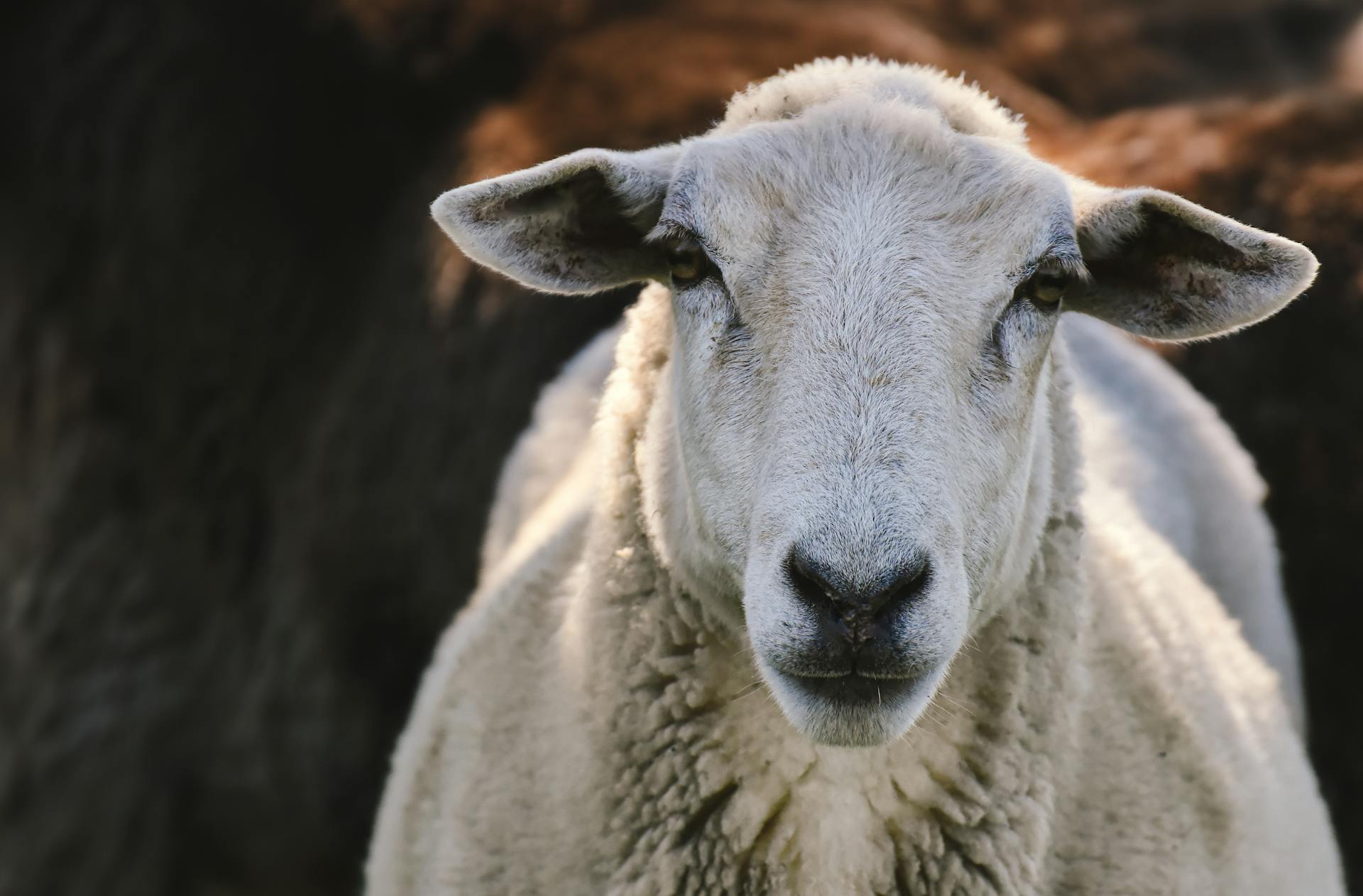
sheep
Are sheep and goats related?
Sheep and goats are related, sharing the same family, Bovidae and subfamily, Caprinae. They share a common prehistoric ancestor that lived over four million years ago, from the goat-antelope group, Rupicaprids, within Caprinae. It was four million years ago that scientists believe members of the Ovis (sheep) and Capra (goat) genera.
Can sheep and goats breed?
Yes, they can. However, the resulting offspring (called a geep or shoat) very rarely survive in natural breeding conditions. Most offspring are born stillborn. Sheep have 54 chromosomes, while goats have 60, making hybridization nearly impossible.
Can sheep have horns?
Yes. However, it largely depends on their breed, sex, and genetics. Males (rams) often have horns that are large and spiralled, though in some breeds, rams are also hornless. Females (ewes) are usually naturally hornless (polled) in many breeds, though some breeds such as Dorset Horn, Jacob, Icelandic, Navajo-Churro, Wiltshire Horn, Hebridean, Exmoor Horn, and Manx Loaghton have both sexes with horns. Other breeds like Jacob and Manx have a rare genetic condition where both sexes can grow more than one set of horns.
Are sheep and lamb the same?
Basically. Sheep is the general term that encompasses all types, ages, and sexes. Lamb is more age-specific, referring to sheep that are under a year old.
Are sheep and goats the same?
No, they are not. While they may look the same from a distance (especially if you make the mistake of assuming hair sheep like Katahdins are goats), they are two entirely different species: closely related, but not enough to be the same.
Goats (Capra hircus) are relatively easy to distinguish from sheep (Ovis aries) in their tails, horns, coats, beards and lips.
- Tail: Goats hold their tail up; sheep hold their tail down.
- Horns: Goats have narrow horns that point straight up or have a slight curve; sheep have thicker, shorter horns that curl closer to their head.
- Coats: Goats typically have short coats of hair (except long-haired goats like Cashmere, which have long, flowing hair), as do few species of sheep, but most sheep have thicker coats of wool that are densely curly. Sheep require shearing because of that thick wool.
- Beards: Sheep lack beards; goats have them.
- Lips: Sheep often have a defined groove (called a philtrum) that splits their upper lip. Goats typically lack this split.
Goats are browsers whereas sheep prefer to graze. Sheep have stronger herding instincts than goats; goats tend to be more independent, curious, and apt to find ways to escape their enclosure.
Are sheep smart?
Not really. Some (mostly animal rights groups) argue they are, citing their ability to recognize faces and having a complex social dynamic in their flock.
However, others will attest that sheep aren’t the brightest when it comes to finding ways to get themselves out of trouble, like getting stuck in a ditch or defending themselves against predators.
Are sheep cattle?
No. Sheep are much smaller than cattle, with their average mature weights being 200 to 300 lb (rams heavier than ewes). The average weight of a mature cow is 1600 lb (bulls average 2200 lb or more). Cattle stand about 5 to 6 feet (some taller) at the shoulder, whereas sheep stand only 2 to 3 feet at the shoulder.
Many sheep breeds also have heavier, densely curly coats called wool, whereas cattle have hair (or fur). Sheep are also identified by their thick, curled horns and their split-looking upper lip that are covered by soft, short hairs. Cattle have horns that point out the sides and curve upward as they get older (certain breeds like Ankole have horns that point upward), and united, wet noses.
Can sheep and goats live together?
Sheep and goats can easily live together, yes, and many farms that contain sheep and goats often house them together. The exception is at breeding time, since breeding a rutting buck (goat) with ewes (or a ram to [goat] does) will result in no offspring or nothing but stillborn offspring. To get offspring from either, a farmer needs males from either species to breed their does and ewes.
Otherwise, goats and sheep can graze or browse together with no problem. Goats might be a little more food-aggressive than sheep and need better fencing than sheep do, but since they’re basicall the same size, they can complement each other if being herded in an area with a mix of shrubbery and grassland.
Can sheep swim?
Yes, but they’re not eager to go swimming, nor are they all that strong. They instinctively know the “doggy paddle” if they need to swim, so they don’t need to learn. If they have to cross a bit of water, their wool can provide temporary buoyancy through trapped air and lanolin oil, which makes it harder for water to soak in quickly. However, this buoyancy doesn’t last long since, if the sheep has to stay in water for long, it can become saturated and heavy with water, causing exhaustion and eventually death via drowning if they’re not rescued in time.
Typically, sheep would rather avoid water than find any opportunity to swim in it. They are naturally afraid of deep or fast-moving water and avoid it unless they are chased, their pasture becomes flooded, or have a real desire to escape danger.
Are sheep ruminants?
Yes. Like cattle, bison, buffalo, and other ruminants, sheep have three forestomachs (reticulum, rumen, and omasum) and one true stomach (abomasum), and chew cud.
Can sheep eat apples?
Yes, but mainly as a treat. An apple should be cut into small pieces, as they can choke on large, solid chunks due to their small esophageal opening.
They should only be fed in moderation, as too much sugar can cause stomach aches, loose poop, bloating or acidosis. Do not feed rotten or moldy fruit as that can cause illness or, at worst, death.
Are sheep goats?
No. Sheep and goats are different but closely related animals that look somewhat similar, especially in body size and facial features.
Here are some key differences between sheep and goats to pay close attention to:
- Tail: Goats hold their tail up; sheep hold their tail down.
- Horns: Goats have narrow horns that point straight up or have a slight curve; sheep have thicker, shorter horns that curl closer to their head.
- Coats: Goats typically have short coats of hair (except long-haired goats like Cashmere, which have long, flowing hair), as do few species of sheep, but most sheep have thicker coats of wool that are densely curly. Sheep require shearing because of that thick wool.
- Beards: Sheep lack beards; goats have them.
- Lips: Sheep often have a defined groove (called a philtrum) that splits their upper lip. Goats typically lack this split.
- Diet: Goats are browsers whereas sheep prefer to graze.
- Social: Sheep have stronger herding instincts than goats; goats tend to be more independent, curious, and apt to find ways to escape their enclosure.
Can sheep eat carrots?
Yes. Cut carrots into small pieces, as they can choke on large, solid chunks because of their small esophageal opening.
Feed them only in moderation, as too much sugar (yes, carrots contain a lot of suagrs) can cause stomach aches, loose poop, bloating, or acidosis. Do not feed rotten or mouldy carrots, as that can cause illness or, at worst, death.
What do sheep eat?
Sheep are grazing herbivores that like to eat a combination of mostly grass with various forbs (broad-leafed plants) thrown in, including legumes (clover, alfalfa, trefoil, lespedeza, milkvetch, and sainfoin). On farms, sheep will often eat hay, grains, silage, and pasture forages.
They are notorious for clipping a pasture very short to their split upper lip that allows greater dexterity compared with the grazing habits of cattle; they can nibble on vegetation close to the ground, where cattle have to rely on what they can scoop up with their powerful tongues.
Are sheep friendly?
Sheep are, for the most part, quite shy. They would rather stick with the members of their flock than be friendly with a much larger, threatening-looking two-legged “predator.” However, sheep can be very curious and will come up to you to investigate you if you stay still and don’t make sudden movements. Just, don’t expect them to stay to be petted.
However, sheep that have been raised so that they’re highly accustomed to people (like in petting zoos or on farm sanctuaries that allow regular visitors to visit their “residents”) are much more likely to be friendly and not mind pets nor treats.
Are sheep herbivores?
Sheep are herbivores, yes. They prefer a diet of grasses, legumes and forbs over anything else.
Are sheep bovine?
No. Sheep are Ovine, belonging to the subfamily Ovidae. They are much different from cattle, from their smaller size to grazing habits and ability to produce wool.
Are sheep immune to snake venom?
No. This is an urban legend fueled by the mistaken belief that any random sheep or lamb is naturally immune to snake venom (or has blood that instantly destroys it, making it completely harmless).
The fact is that scientists produce antivenom by injecting a tiny, non-lethal amount of venom into their blood over a long period to force sheep to produce powerful antibodies to fight (neutralize) this poison in their blood. Researchers harvest the blood and purify these specific antibodies to create pharmaceutical treatments for those with species-specific snakebite injuries.
Raw sheep blood does not contain these concentrated antibodies, meaning that sheep cannot automatically neutralize snake venom without emergency veterinary intervention. Sheep (and lambs) will suffer severe injury, tissue damage, paralysis, and death when bitten by poisonous snakes like vipers or elapids.
Can sheep have copper?
Yes, sheep still need copper in their diet, just like all other animals. However, their tolerance for it is much lower, and they can easily suffer and die from fatal copper poisoning.
The reason is that a sheep’s liver cannot easily get rid of excess copper. A highly stressful event can cause their livers to suddenly release copper into their bloodstream. This release can cause red blood cells to burst, leading to jaundice, dark urine, liver failure, and often death.
Sheep require between 1 and 8.6 mg/kg of dry matter in the diet on a daily basis, according to the NRC (National Research Council). This variation depends on age, metabolic requirements, and the amount of antagonists like molybdenum (Mo) they receive in their diets. Diets lower in Mo, for example, allow them to absorb higher amounts of copper. Other antagonists that interfere with copper absorption include iron, sulphur, and, to a lesser extent, calcium and zinc.
Are sheep ungulates?
Yes, sheep are ungulates. Ungulate roughly means “being hooved.” They belong to Order Artiodactyla, which encompasses other hooved mammals, including bison, cattle, antelope, deer, elk, and goats.
Can sheep eat bananas?
Yes, but only as an occasional treat. Bananas have high sugar and potassium levels, which can upset a sheep’s digestive system or cause bloating if fed in large amounts. Cut the fruit into small pieces to prevent choking. Sheep can eat organic banana peels as they have much lower harmful pesticide levels than non-organic bananas.
Are sheep native to North America?
Domestic sheep are not native to North America. They are native to Europe and Asia.
Wild sheep such as Bighorn Sheep and Dall’s Sheep are native to North America.
Can sheep see in the dark?
Yes, as long as it’s not totally pitch-black. They can see decently well in moonlight and under starry skies, better than us humans. This is because of a reflective layer at the back of their retinas called the tapetum lucidum, which reflects low light back to the lens, letting them pick out more detail in the dark. This is why a sheep’s eyes look like they glow a bright yellowish-green when a flashlight or car headlight hits them at night. Their wide, rectangular pupils let in a large amount of light from the horizon, helping them spot movement at ground level.
Can sheep eat alfalfa?
Yes. Sheep love alfalfa, and it’s an important part of their diet due to its high protein and calcium content, which is important for lactating ewes and growing lambs. However, alfalfa poses a health issue if it’s not properly and slowly introduced or fed along with non-bloating forages like grass, called bloat.
Like cattle, sheep will bloat on alfalfa due to its very high digestibility in the rumen. Rumen microbes, when digesting alfalfa, can produce slime-lined bubbles filled with gases. These tiny bubbles quickly accumulate, making it difficult for the sheep to release them via burping. This accumulation puts pressure on the rumen walls and the lungs, causing pain and discomfort and difficulty breathing. If not caught and treated immediately (releasing the bubbles or putting a solution of mineral oil or dishsoap to disappate the bubbles), the sheep can die.
When fed with non-bloating plants like grass, this greatly slows down the digestibility of alfalfa, significantly reducing bloat risk.
Will sheep eat weeds?
Yes, sheep will eat certain weeds that other livestock, like cattle (in particular), refuse to touch. Here in North America, sheep will eat weeds like leafy spurge, thistle, spotted knapweed, absinthe wormwood, brassica weeds like field mustard and common ragweed, kudzu, sericea lespedeza, poison ivy, and woody plants. They will avoid weeds that they don’t know they can eat, and will need to be trained to target. They will also avoid weeds that contain bitter compounds that make them unpalatable, such as tall buttercup
Can sheep eat grapes?
Yes, they can, but like other high-sugar fruits and vegetables, they should be fed in small amounts and in moderation, as too much can cause stomach upset or bloating. Some grapes come in a size that is easy for sheep to choke on (large ones in particular), so they should be cut in half before being fed.
Sheep are often grazed in vineyards to control weeds and eat cover crops that have been planted in between rows (after harvest or before bud break), and will often enjoy chowing down on grapevine leaves and fruits if they’re not trained to avoid them.
Will sheep drink from running water?
Not really. Sheep would much rather drink from still water than fast-running water because they sense a dangerous drowning risk if they slip and fall into a fast-moving stream. They naturally seek out calm sources to drink from like quiet pools, ponds, or troughs.
Can sheep survive in the wild?
Most sheep cannot survive in the wild. Wool sheep in particular have a very difficult time surviving in the wild because their wool doesn’t stop growing and can get so thick and heavy that it makes it difficult for them to move or graze normally. Sheep alone are an easy target for predators like wolves, bears, and lions, especially in the open.
Sheep have a better chance of survival in wooded or forested areas because the brush and trees provide more protection. But this is not always guaranteed.
That is not to say that feral sheep don’t exist, because there are feral (once-domesticated) sheep that live in the wild in parts of Europe (rugged, mountainous areas) and remote islands with few predators.
Can sheep and cows live together?
For the most part, yes. Cows can be a source of protection for sheep if there are predators around, and they can get along fairly well when it comes to eating together, provided there are enough feeding spots to reduce competition between cattle and sheep. The fencing should be designed to contain sheep, given their smaller size and higher tendency to escape through cattle fencing, and feeders should be small enough for sheep to eat from, since cattle feeders are difficult for sheep to use.
The only and most significant limitation is that sheep cannot have the same mineral mix as cattle. Cattle mineral that contains copper is dangerous for sheep because sheep are intolerant to high amouts of copper. Alternatively, if cattle eat only sheep mineral, they will get copper deficiency because they’re not getting enough copper in their diet. Sheep should have sole access to sheep mineral and should not be allowed to consume cattle mineral.
What sheep have horns?
Sheep breeds that have horns include:
- Navajo-Churro (multi-horned)
- Jacob (multi-horned)
- American Blackbelly
- Dorset Horn
- Wiltshire
- Scottish Blackface
- Hebridean
- Exmoor
- Whitefaced Woodland
- Icelandic
- Mouflon
- Grivette
- Valais Blacknose
- Boreray
- Dalesbred
- Lonk
- Manx Loaghton (multi-horned)
- Norfolk Horn
- Shetland
Who eats sheep?
Sheep meat, also called mutton, is most commonly eaten in China, Central Asia, the Middle East, Australia, New Zealand, and parts of Europe. North American markets rarely carry mutton, but people of Middle Eastern, Caribbean, and African descent most commonly eat lamb. Mutton is a strong-flavoured meat that some people don’t like, so it can be considered to be an “acquired taste.”
Carnivorous animals that prey on sheep include wolves, coyotes, dingoes, cougars, leopards, jaguars, lions, tigers , black bears and brown bears.
Can sheep and chickens live together?
Yes. They can live together as a safe, cohesive flock where they will form a low-stress stock combination.
Chickens love eating bugs and other creatures that sheep may attract (or that will naturally come into a pasture, such as grasshoppers, crickets, mice, flies, and other creepy-crawlies). They will also scratch through sheep manure to get at worms and larval pests, which helps break the pest cycle for the sheep, especially.
Sheep and chickens prefer shorter grass, and sheep will graze grasses down shorter which makes it easier for chickens to find their favourite bugs to hunt and eat. Chickens also help aerate the soil by scratching the soil surface and spreading sheep manure.
Chickens and sheep don’t particularly care about each other (and aren’t in competition with each other for the same food source, as mentioned above), but a chicken may like to perch on a sheep’s back to rest. Sheep often won’t mind (or really feel) the chicken on them because chickens are fairly light and won’t necessarily hurt them. Shorn sheep may feel the chicken on their back more readily and may shy away, but repeated attempts will desensitize the sheep and teach it that the chicken means no harm by perching on its back.
The main concern that you should have when housing chickens and sheep together is that chicken feed is often toxic to sheep due to the much higher copper content and high-protein feed additives that can cause stomach illness. Chickens should be fed in areas that are completely inaccessible to sheep, and chicken feed should be stored likewise from sheep feed.
Chickens also will roost near open or dirty water sources, which will contaminate water for the sheep. Elevate water buckets, put up roost bars, or use covered shelves to keep water clean for the sheep.
Finally, sheep like to rub against structures. Keep delicate henhouses separate or sturdy enough to handle rubbing sheep without disturbing nesting hens.
Can sheep and cattle graze together?
Yes, they can. Cattle and sheep are often successfully grazed together, creating what graziers call a “flerd.”
Cattle have been grazed with sheep for thousands of years, but for some reason, in the last couple of centuries, people have avoided the concept (or dared to combine their beloved beef stock with those pesky grass-hogging “range maggots”) because of cultural prejudices between cattle herders and shepherds.
Cattle can be aggressive to sheep if they’re not raised with them, and both parties will need time to adjust to each other before being grazed together. But since both are quite peaceable and social animals, the grace period doesn’t take long, and cattle and sheep can get along famously. Cattle may also provide decent protection for sheep against predators if they are fairly closely bonded.
Who herds sheep?
Shepherds are people who herd sheep. Some people or countries also call them “sheepherders.”
Dogs that are bred for their herding skills (called herding dogs), like Border Collies, Australian Shepherds, Kelpies, Australian Cattle Dogs, Corgis, Shetland Sheepdogs, and Australian Koolies, are often used for herding sheep. The Border Collie is the most popular dog breed to use for herding sheep in many countries, from Great Britian to the United States and Australia/New Zealand.
When do sheep attack?
Sheep don’t often attack, as they’re generally pretty shy or curious about you. However, sheep will turn around and attack if:
- An ewe is protecting her lamb: Ewes may charge or act aggressively if they feel anything is getting too close to their newborn lambs.
- A ram is “in rut” during breeding season: Rams experience higher levels of hormones and aggression during the rutting season, making them prone to challenging or charging humans.
- They feel cornered: If a sheep is trapped in a tight space or cannot find an escape route, it may fight instead of flee.
- A dog is present: Sheep view dogs as natural predators. Walking a dog near a flock can easily provoke a defensive reaction.
- Your back is turned: A sheep—especially an assertive ram—may interpret a turned back as a sign of weakness or submission and decide to initiate a headbutt.
Why do sheep need a shepherd?
Sheep are generally pretty dependent on guidance for finding better pasture, clean water sources, protection from predators, physical help if a sheep gets in trouble it cannot get out of (like falling on its back in a ditch or depression in the ground), for health care (wound treatment, helping ewes lamb, treating illness, parasite control, etc.), keeping them together and preventing one or more from getting lost or separated from the rest of the flock, and if they’re wool sheep, shearing them when their wool gets too thick and heavy for summer pasture.
Will sheep eat poison ivy?
Yes, they can. However, it’s not usually their first choice; they typically like to go for grass and other forbs over poison ivy. If sheep are unfamiliar with this weed, they may need training to get them to eat it rather than choose to avoid it out of unfamiliarity.
What sound to sheep make?
Sheep make a “baaaah” sound or a bleat. Rams may grunt or snort especially when in rut.
What sheep are best for meat?
Sheep that are a year old or less are typically best for meat, which is called “lamb.” It doesn’t have as strong and off-putting a taste as mutton does, and is more popular a meat compared with mutton. Typically male lambs are favoured for meat over females since females are valued for their breeding ability, whereas males are more heavily selected for their genetic viability for the flock. Undesirable males are set aside to be raised as meat animals.
Where do sheep live?
Sheep live on farms or ranches. They are often found on pastures, though some farms house sheep in barns.
Where are sheep kept?
In barns or on pastures.
Where do sheep sleep?
Sheep will sleep in sheds, in sheltered treed areas, in barns, or in a group on pasture. They will sheep wherever they feel safe according to where their shepherd and livestock guardian dog has them and is looking over them.
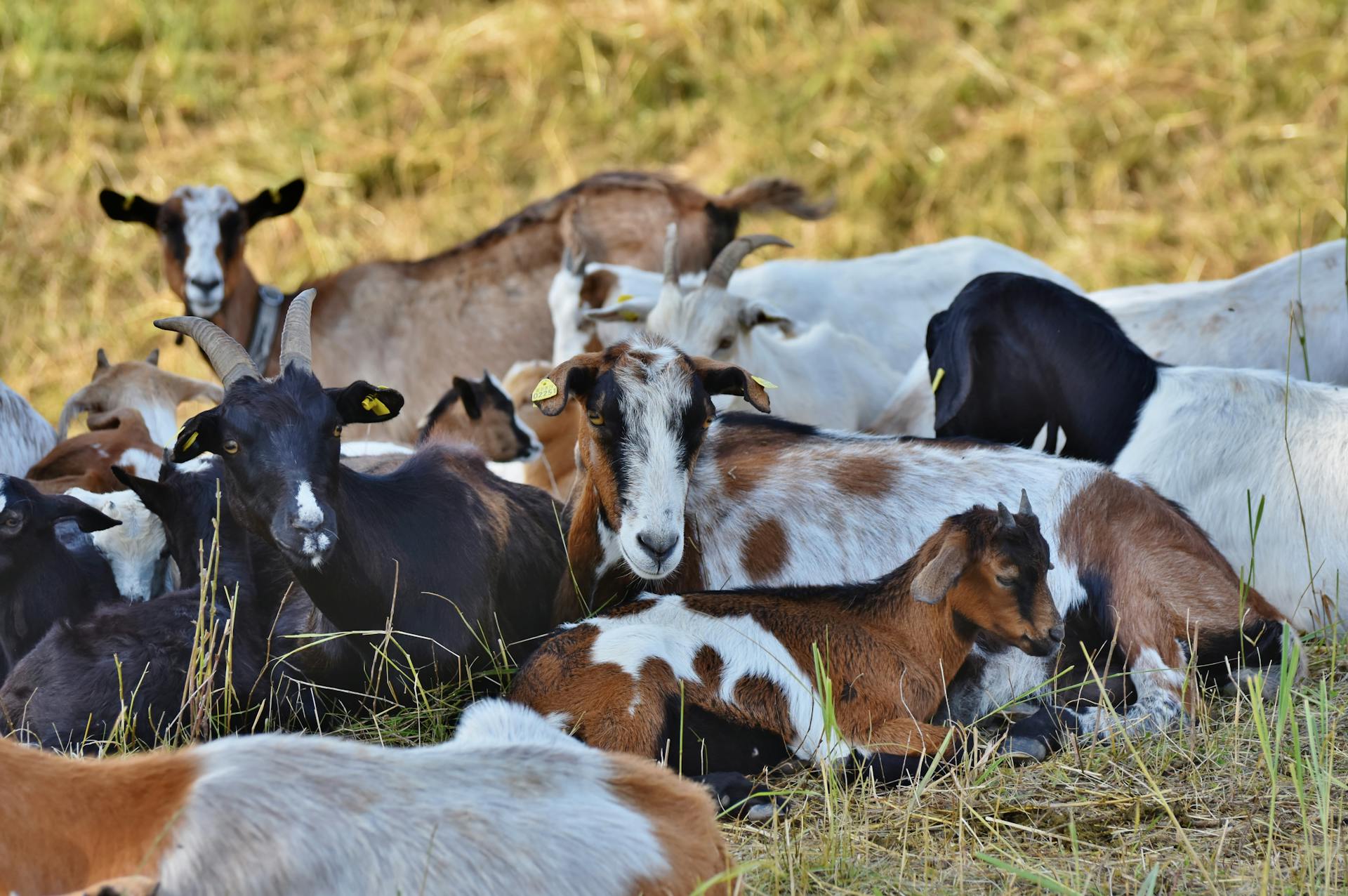
goats
What are goats who faint?
Goats who faint are a breed called Tennessee Fainting Goat. They have a particular gene (see next question below) that causes their muscles to spasm throughout their body when startled, resulting in their falling over.
Why do goats faint?
Not all goats faint. There is a particular breed of goat called the Tennessee Fainting Goat that have a recessive genetic condition called myotonia congenita, which is passed on from buck and doe to their offspring. Dam (doe) and sire (buck) have to have two copies to pass on to their offspring for their offspring to also express the “fainting” expression. Otherwise, if only one parent (or neither parents) have this gene, their offspring will not have this disorder.
These goats don’t actually faint or pass out from fright, rather their skeletal muscles have a delayed response in relaxing as they try to run away (via voluntary contraction), causing their muscles to go rigid and renders them unable to move. As a result, they lose their balance and they fall over, still fully conscious.
The condition doesn’t hurt them, and they remain in this stiffened state for as long as 5 to 20 seconds, before their muscles finally relax enough where they can stand back up and go back to their normal activities again.
Will goats eat poison ivy?
Yes, they relish the plant and do not suffer from its toxic oil called urushiol. They don’t get an allergic reaction from the plant, and their digestive system (being ruminants) are built to handle the tough, woody, tannin-rich plants.
Can goats eat poison ivy?
Yes. They don’t get an allergic reaction from the plant, and their digestive system (being ruminants) are built to handle the tough, woody, tannin-rich plants.
Can goats eat grapes?
Yes. However, it should only be given as a bite-sized treat, as they are full of sugar and can cause bloat or acidosis. They can also choke on the grape berries, especially whole grapes, for younger goats. Feeding younger goats grapes should be discouraged if you cannot cut them in half first.
Can goats eat carrots?
Yes, but only as a treat. Carrots are high in sugars and can cause bloat or acidosis if too much is fed. Young goats may struggle with large-sized pieces because they can pose a choking hazard. Cutting carrots up in smaller pieces for young goats is a good practice.
Can goats eat apples?
Yes. However, it should only be given as a bite-sized treat, as they are full of sugar and can cause bloat or acidosis.
Can goats swim?
Yes, but they don’t prefer to.
Can goats eat tomatoes?
Yes, but only ripe tomato berries and as a treat. Avoid feeding them whole tomato plants as they, being a member of the nightshade family (Solanaceae), contain toxins that can hurt them. Whole plants (leaves, roots, stems, and unripe fruits) contain glycoalkaloids like solanine and tomatine, which, if eaten in large amounts, cause lethargy, diarrhea, vomiting, muscle weakness, and neurological issues. Ripe tomatoes contain lower amounts of glycoalkaloids which are safer to feed. However, these should only be fed as a treat since the high acidity and sugar levels can cause acidosis and/or bloating if they are fed too much.
Can goats eat bananas?
Yes. However, they should only be given as a bite-sized treat, as they are full of sugar and can cause bloat or acidosis.
Are goats and sheep related?
Yes. While sheep and goats belong to different genera (Ovis versus Capra), both belong to the same Family Bovidae, Subfamily Caprinae, and Tribe Caprini.
Essentially, they are closely-related cousins taxonomically. However, their chromosome count is different (sheep with 54 and goats with 60) making hybridizing between the two almost impossible.
Can goats eat celery?
Yes, celery can be a tasty, crunchy treat for them to eat, but should be cut up into small pieces and fed as a treat. It’s high in sugar, so lots can cause stomach issues, but its fibre and high water content can be a nice way to hydrate your goats in the summer with added fibre for their rumens.
Are goats and sheep the same?
No. While they may look the same from a distance (especially if you make the mistake of assuming hair sheep like Katahdins are goats), they are two entirely different species: closely related, but not enough to be the same.
Goats (Capra hircus) are relatively easy to distinguish from sheep (Ovis aries) in their tails, horns, coats, beards and lips.
- Tail: Goats hold their tail up; sheep hold their tail down.
- Horns: Goats have narrow horns that point straight up or have a slight curve; sheep have thicker, shorter horns that curl closer to their head.
- Coats: Goats typically have short coats of hair (except long-haired goats like Cashmere, which have long, flowing hair), as do few species of sheep, but most sheep have thicker coats of wool that are densely curly. Sheep require shearing because of that thick wool.
- Beards: Sheep lack beards; goats have them.
- Lips: Sheep often have a defined groove (called a philtrum) that splits their upper lip. Goats typically lack this split.
Goats are browsers whereas sheep prefer to graze. Sheep have stronger herding instincts than goats; goats tend to be more independent, curious, and apt to find ways to escape their enclosure.
What do goats eat?
While the common quip you might hear someone say is, “everything,” the truth is that goats cannot eat everything and anything. They are, in fact, highly selective eaters, with supple, flexible lips that allow them to select particular parts of plants to nibble, bite, chew and swallow. They aren’t trash or tin can eaters as common urban legend has it.
Goats will eat hay, grass, and silage just like most other types of livestock, however their stomachs and ability to climb on just about anything gives them away as great browsers of shrubs and trees. They love any opportunity given to eat brush and trees, and in fact do better if they are allowed to browse as opposed to having them graze like sheep. However, they also love eating the tender shoots and buds of a variety of forbs like thistles, petunias, dandelions, ragweed, spurge, alfalfa, clovers, vetches, and other plants.
What are goats who climb trees?
Most goats can climb trees, if given the opportunity. Young goats, especially, love the activity of climbing anything they can land their little hooves on.
However, when doing a Google search on “goats who climb trees,” you will land on a search summary that describes the infamy of Morrocan goats who climb trees to access leaves and fruit of the Argan tree (Argania spinosa). Argan fruit are highly nutritious and fleshy, making them a highly valued food source for goats during the dry season when food on the ground is scarce.
Will goats eat anything?
Truthfully, no. They are very curious creatures and tend to like to sample things they don’t know with their mouths, such as clothing, metal bits, trash, paper, etc., by licking, nibbling or even chewing on them, but that doesn’t mean they’ll eat anything, as this is pure myth.
Goats prefer plants to eat, especially tree leaves (and some branches, if tender enough) and shrubs, and a variety of different types of forbs. They’ll also eat grass, but it’s not their most favourite food. In fact, they’re very selective, meaning that they prefer the feeds they’re used to eating, and can refuse new feeds for days. They’ll also select different parts of plants they like above others using their flexible lips and tongue, and ignore other parts they don’t like.
Also, certain plants are toxic for them such as tomatoes, cherry trees, rhododendrons, potatoes, water hemlock, and azeleas. Tall buttercup produces a sharp, bitter taste when eaten fresh, making them avoid consuming the plant.
Are goats smart?
Goats are fairly intelligent creatures, however their “intelligence” can sometimes get themselves into trouble. They are highly social creatures, however, being able to recognize faces and know their social hierarchy. Their very curious nature, which may get them into trouble, allows them to learn about their surroundings, what is good to eat and what isn’t, where their safe place is, who to trust, and so on. They can also learn to do different tasks for a food reward. They are indepedent, though, which can make them seem a bit stubborn and difficult to train, but not impossible. Some argue that goats are almost as smart as most dogs, and can be kept as pets.
Can goats eat strawberries?
Yes, but in moderation. Strawberries are high in sugars and can cause digestive upset if they eat too much. Some strawberries are too big to be fed and will need to be cut into bite-sized pieces so they don’t choke on them.
Can goats eat bread?
Yes, but in small quantities. Bread is very rich in carbohydrates, and feeding too much can lead to bloat or acidosis in goats. Bread should be fed only as an occaisonal treat, not as the main part of their diet.
Will goats eat meat?
Goats may taste-test meat if they’re not familiar with it, but they won’t eat meat, as meat is not a dietary staple. Goats are herbivores, not omnivores or carnivores. Goats may eat some meat if they are experiencing a severe nutrient deficiency involving phosphorus or protein (a condition called “pica”) in order to satisfy this nutritional craving, but that doesn’t make them regular meat-eaters like dogs or cats.
Will goats eat grass?
Yes, goats will eat grass. Goats eat grass on a regular basis, but they’re not sheep or cattle who are major grass-eaters. Goats eat grass along with forbs, shrubs, and parts of trees that they can reach (or climb, like those in southern Morocco), as they are built more like browsers than grazers.
Are goats good pets?
While goats are affectionate and fun to have as pets, the biggest challenge around keeping them as pets (unlike traditional pets like dogs, cats, gerbils, guinea pigs, goldfish, and ferrets) is keeping them in such a way that makes them happy.
Goats need ample outdoor space, ample climbing opportunities, the right care (feed and vet care), strong fencing that they cannot escape from (as they are great escape artists), and they cannot be kept alone.
They can climb on anything, potentially causing property damage (more likely than a bored dog would), and will poop and pee anywhere they like. Thus, they are next to impossible to housebreak, unlike dogs and cats.
Goats get anxious, depressed and lonely if there is only one of them in the household, even if they are housed with a dog or two or cats or even horses. There need to be at least two goats to keep, rather than just one.
Goats require the right kind of feed and veterinary care to keep them healthy for a long time. They cannot be expected to graze, as they are not built for that like sheep are. They are browsers, preferring to eat almost everything in your garden that you don’t want them to eat! They are also sensitive to internal parasites and can die if proactive measures aren’t taken to make sure they don’t get an unhealthy, fatal parasite load (commonly gotten when they regularly eat around their own poop). Finally, a specialized veterinarian (like a large-animal or small ruminant vet) needs to be fairly close by to access in case your goat gets sick. Small-animal vets that only do dogs, cats, reptiles, or birds normally refuse to treat goats, or will send you to a far-away vet on a referral.
Lastly, it’s very important to choose the right sex. Intact male goats get “rutty” where, when they start to become sexually active (at around 6 months to 1 year of age), they will start behaving “funny” and aggressive towards people and other pets. Also, they often urinate on themselves, making them stink terribly. Males MUST be castrated if you plan to keep a male goat as a pet, or choose females only. Wethers and does are much more docile and easier to have as a pet.
Certain housing standards in cities, towns, or villages may also have rulings against keeping goats (considered livestock) as pets, so be mindful of your local municipal bylaws.
All in all, for the normal urbanite dweller, goats don’t normally make good pets unless you have a giant backyard and plenty of money to spend on strong, goat-tight fencing and the right feed, and your municipality allows keeping goats as pets.
Can goats eat oranges?
Yes, but oranges are high in sugars, so they should only be fed as a treat and in bite-sized pieces.
Can goats eat lettuce?
Yes, goats like lettuce, but it is high in carbohydrates, so it shouldn’t make up more than 10% of a goat’s diet, or can be fed as a hydrating treat in the summer.
Can goats eat cabbage?
Yes. Goats like cabbage, but it is high in carbohydrates, so it shouldn’t make up more than 10% of a goat’s diet; it can be fed as a fun treat in the summer.
Will goats eat bamboo?
Yes, goats will eat bamboo. They will prefer the leaves, young, tender shoots and soft, green outer parts over the tall, woody stalks. Tall bamboo plants are much harder to access and are very fibrous (almost like a tree trunk), whereas smaller plants are softer, less fibrous and smaller for goats to eat.
Are goats ruminants?
Yes. Goats have a true stomach in addition to three forestomachs and chew the cud just like their larger bovine cousins and their close ovine cousins.
Will goats eat blackberry bushes?
Yes, goats love eating blackerry brairs despite the thorns and prickles, as their tough, yet dextrous lips can easily find and pick. the tasty leaves to snip off and eat. They can also work their way down the briair branches to where there’s not much left, if they’re forced or allowed to. This is why goats are such a great means of natural brush control.
The added benefit to the goats is that black berry leaves contain a lot of nutrients and tannins, which is great for parasite control plus nutritional needs for the animals.
Are goats and lambs the same?
No. Goats are entirely different from lambs. Lambs are offspring of sheep, and goats are a different species from sheep. See the question, “Are goats and sheep the same” above.
Will goats eat kudzu?
Yes, goats love kudzu, as it is a high-quality and very tasty fodder for them to chow down on. A herd can stip foliage from the ground up as far as they can reach in no time. It can contain 15 to 18% crude protein, which is perfect for lactating does or young growing goat kids.
Are goats friendly?
Goats can be shy, but their curiousity can make them seem pretty friendly. Goat kids, especially, are super curious and fun to see if they can be befriended and spoiled! Beware, though, of intact male goats that may seem friendly at first but may head-butt you at barely a moment’s notice.
Are goats sheep?
No. While they may look the same from a distance (especially if you make the mistake of assuming hair sheep like Katahdins are goats), they are two entirely different species: closely related, but not enough to be the same.
Goats (Capra hircus) are relatively easy to distinguish from sheep (Ovis aries) in their tails, horns, coats, beards and lips.
- Tail: Goats hold their tail up; sheep hold their tail down.
- Horns: Goats have narrow horns that point straight up or have a slight curve; sheep have thicker, shorter horns that curl closer to their head.
- Coats: Goats typically have short coats of hair (except long-haired goats like Cashmere, which have long, flowing hair), as do few species of sheep, but most sheep have thicker coats of wool that are densely curly. Sheep require shearing because of that thick wool.
- Beards: Sheep lack beards; goats have them.
- Lips: Sheep often have a defined groove (called a philtrum) that splits their upper lip. Goats typically lack this split.
Goats are browsers whereas sheep prefer to graze. Sheep have stronger herding instincts than goats; goats tend to be more independent, curious, and apt to find ways to escape their enclosure.
Are goats bovine?
No. Goats are caprine. They belong in the same family as bovines (Bovidae) but they’re certainly not bovines or cows/cattle. Cows/cattle are much larger (3/4’s the size of a big 250 lb goat), broader in body over all, and are lumbering grazing animals as opposed to agile, small, light browsers that goats are best known for.
Are goats herbivores?
Yes, goats are indeed herbivores, they eat a plant-only diet of forbs, tree and shrubs, and grasses. Their digestive system is built in such a way that they can only have plants, as a ruminant animal.
Are goats hard to take care of?
Unless you havea a massive backyard, an understanding housing association board, plenty of money to set up goat-proof fencing (the type goats will find difficult to escape from), the understanding that goats should stay outside and not in the house and you cannot have just one (a lonely goat is a sad, and depressed goat), and the money and knowledge to keep your goat happy and healthy for its entire life (12 to 15 years), then no, they’re not hard to keep at all.
But, for most people who don’t have either or any of the above, goats are definitely hard to take care of, and carry the risk of losing them (death) or needing animal control to take them away from you. Goats may seem tough on the outside, but they’re actually quite finicky and delicate under the wrong hands.
Thus, don’t go buying a goat or two just because they’re cute. Please understand the work and money that goes into caring for these animals properly!
What are goats who scream like humans?
This “scream” or bleat is just normal goat chatter when they’re calling for food, momma does are hollering for their babies from a long ways away, or a buck is trying to call in some females for potential mating attention, or they’re trying to reunite with their herd from a distance.. Young goats can be particularly vocal and may “scream” if they want momma (or a bottle from their surrogate human “momma”), if a human is holding them and they don’t like it, and other reasons.
Are goats kosher?
Yes, goats are kosher because they have split hooves and they chew their cud.
For kosher ritual slaughter, the goat must be slaughtered by a certified ritual slaughterer (a shochet) according to Jewish law (shechita). The meat then, must undergo a process to remove blood, typically by soaking and salting (melichah). Finally, like all meat, goat cannot be cooked, served, or eaten with dairy products.
Can goats be potty trained?
Goats can be trained to urinate in a designated spot (success rate only 85%), but the same cannot be said for them defecating. They, unlike dogs and cats, cannot control their bowel movements and will defecate whenever and wherever throughout the day. Owners will use diapers on indoor young goats to control their poop and make sure there’s no random piles of pellets to step in accidentally on the floor. Once past the fragile bottle-baby stage, they are more likely moved outdoors in their own enclosure, making it easier (and less of a headache) to clean.
Are goats and rams the same?
No. Goats are an entirely different species from rams (sheep). Ram is the term used for an intact male sheep. See the question, “Are goats and sheep the same,” or “are goats sheep” above for more info.
Who eats goats?
Goat meat (or “chevron”) is a common meat for Mediterranean, African and Middle Eastern individuals or people of those cultures. Goats is also eaten in many parts of Europe and Asia, such as France, Spain, Greece, Italy, China, Nepal, Russia, Indonesia, Malaysia, and others. Chevron is also eaten in Central America and South America. It is less common in Westernized cultures in Europe and North America where beef, pork, and chicken are more popular meats, making goat meat a “specialty meat.”
Who sells goat milk?
Goat milk has gained popularity over the last couple of decades for its lack of lactose, making it the perfect drink for lactose-intolerant people. Goat milk can be found in most grocery stores in the dairy aisle. Farmers at farmers markets may also sell goats milk as well as products made from goats milk like soaps, lotions, and body wash.
What goats are best for meat?
Young male goats around a year old (castrated) are ideal for being raised for meat. Some females may be slaughtered, but they’re prized for breeding, usually.
As for breeds, Boer goats are very popular meat breeds with their fast growth and fattening ability. Other breeds include Kiko goats, Savannas, Spanish, and Fainting goats. Kikos are ideal for their ability to thrive on rugged terrain while requiring minimal supplementation.
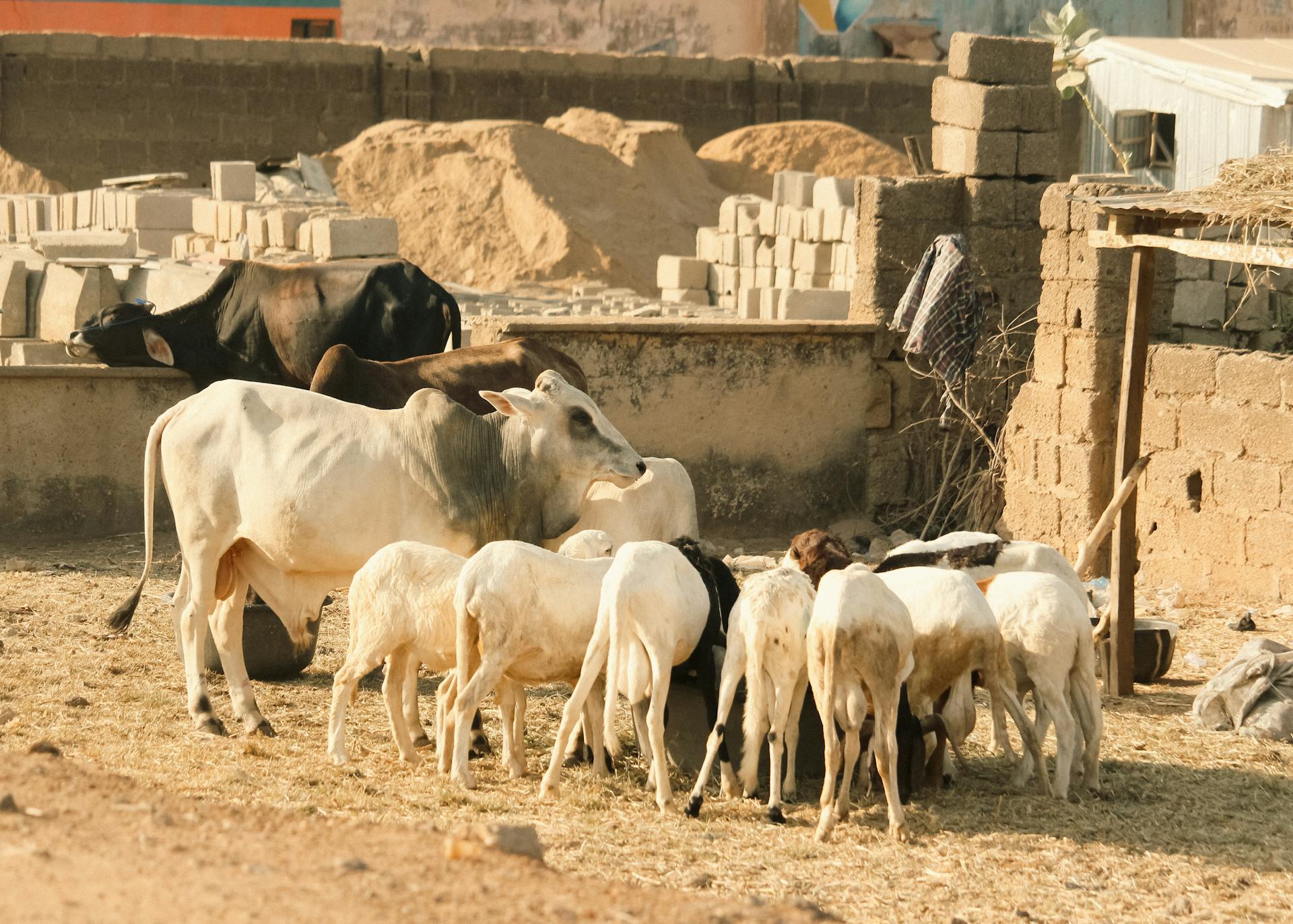
ruminants
What is a ruminant?
A ruminant, in brief, is any herbivorous animal that regurgitates and chews its food after eating its fill. It has “four stomachs” (technically, four stomach chambers): the reticulum, rumen, omasum, and abomasum. Check out the page What is a Ruminant for more info.
Are deer ruminants?
Yes, deer are ruminants. They have a multi-chambered stomach where the plant matter they eat gets broken down by fermentation in their foregut (rumen). They also chew cud. Deer are specialist ruminants in that they thrive on eating woody plants and forbs rather than a diet of mostly grass.
Are goats ruminants?
Yes, goats are ruminants. They have a multi-chambered stomach where the plant matter they eat gets broken down by fermentation in their foregut (rumen). They also chew cud. Like deer, goats are specialist ruminants in that they thrive on eating woody plants and forbs rather than a diet of mostly grass.
Are sheep ruminants?
Yes, sheep are ruminants. They have a multi-chambered stomach where the plant matter they eat gets broken down by fermentation in their foregut (rumen). They also chew cud. They are less “specialized” than their distant cousins, goats, because they will eat a variety of plants from tree leaves to forbs to plenty of grass.
Are giraffes ruminants?
Yes, giraffes are ruminants. They have a multi-chambered stomach where the plant matter they eat gets broken down by fermentation in their foregut (rumen). Despite their long necks and gangly legs, they still chew cud, and will stand or lay in a quiet place away from predators (or at least try) to do so.
They are highly specialized ruminants, meaning they, like goats and deer, prefer a diet of tree leaves than any other plant. Very rarely do giraffes graze, sometimes they will eat brush if it’s tall enough and not going to impede on their constant watch for hungry predators.
Are camels ruminants?
No, camels are not ruminants. They are pseudo ruminants, meaning that they lack a rumen but still chew cud. They still eat plants, but the fermentation occurs in the reticulum and omasum, the only forestomachs of a camelid. Alpacas and llamas are also pseud0-ruminants.
Are elephants ruminants?
No, elephants are “monogastrics,” meaning they have a large, well-developed simple stomach and large, functional ceca (singular: cecum) where most of the fermentation takes place. They are hindgut fermenters, like horses, rabbits, rhinos, and hippos. They do not chew cud, but have to eat a lot of plants to make up for their inefficiencies in being able to digest plants. They will engage on coprophagia (poop eating) to get extra nutrients they couldn’t get from just eating plants.
Are rabbits ruminants?
No, rabbits are monogastrics. They have a simple stomach—hence the term “mono” (meaning one or single) and “gastric” (meaning stomach)—with large, functional ceca. Rabbits are, rather, hindgut fermenters. In their ceca, all fermentation occurs, further breaking down the plants they eat and releasing more nutrients into their bodies.
Rabbits engage in coprophagia (poop eating) to get more nutrients they can’t get from straight plants. Their “first poop” is called “pellets,” which is what they eat. The first poop is quite green in colour, which indicates plenty of plant matter that hasn’t quite broken down completely. Their second poop is much darker in colour, which rabbits won’t eat.
Are ruminants herbivores?
Absolutely! The sole reason that ruminants have “multiple stomachs” or multi-chambered stomachs is so that they can make the most out of digesting plants. Plants are very hard to digest compared to meat because they have lignin and cellulose that give their cells important structure to stay upright. Ruminants need a fermentation vat full of billions of microorganisms to help them break down this tough plant material so that they can access the nutrients within the cells.
Honestly, a ruminant wouldn’t be a ruminant if it weren’t an herbivore. However, not all herbivores are ruminants; several species are hindgut fermenters where the fermentation occurs in the ceca (which is attached to the colon), including rabbits, elephants, rhinoceros, hippopotamus, and horses.
Are ruminants hindgut fermenters?
No, ruminants are foregut fermenters. Their true stomach, the abomasum, sits behind the other three forestomachs (reticulum, rumen, and omasum), as well as the rest of the digestive tract. Ruminants have ceca, but they play a minor role in fermenting plant matter compared to the rumen. The rumen is where almost all the fermentation occurs, housing billions of microorganisms responsible for the fermentation process.
Can ruminants vomit?
Only the young tend to be more capable of vomiting as opposed to older ruminants. It’s rare, but they may vomit if they have a stomach bug.
However, adult ruminants so-called “vomit” or regurgitate in order to chew cud. Digesta gets moved from the rumen into the reticulum, and the reticulum contracts in such a way where a “bolus” (or mouthful) of half-digested plant matter comes up the esophagus into the mouth where it gets chewed for a little bit of time, and reswallowed.
How do ruminants digest their food?
Ruminants have a complex process for digesting their food. Where mongastrics simply have their food go from mouth to stomach to intestines, and out as poop (liver, kidneys, pancreas and gall bladder play important roles along the way), ruminants have a few more steps added before their food even reaches their intestines.
The ruminant grabs a mouthful of plant matter with its tongue, chews for a few seconds (the drier or harder the food, the longer the time to chew), then swallows. Ruminants produce a lot of saliva to help their food go down easily. Down the bolus goes into the reticulum, where it sits for a short time then moves into the rumen. The reticulum catches any foreign objects the ruminant may have accidentally swallowed, from metal bits to rocks.
Once in the rumen, the microorganisms (bacteria, fungi, and protozoa) get to work on their fresh food source and begin the breakdown process, called fermentation. You can think of it as an anaerobic (no oxygen) form of decomposition or “rotting,” and you’d still be correct. Ruminants are, basically, walking decomposition vats on four legs.
Once the animal has eaten her fill, some of the partly “decomposed” or fermented plant matter moves back into the reticulum and then is brought up into the mouth to be chewed more thoroughly as “cud.” The ruminant will spend roughly 1 to 2 minutes chewing that cud before swallowing it and repeating the process with a new bolus. Depending on the species, most ruminants will spend somewhere between 30 and 60 minutes chewing their cud. Chewing the cud is the only time ruminants spend resting from eating, and they may sleep during that time as well.
After the cud returns to the reticulum, it again makes its way back to the rumen to continue further breakdown by anaerobic microbes. Nutrients released from the fermentation process don’t always reach the abomasum (true stomach) and intestines before being absorbed into the bloodstream. In fact, some nutrients are released directly into the bloodstream from the rumen through the ruminal wall, particularly energy compounds and amino acids from both plants and dead microbes. However, there are still more steps to be taken before even more nutrients are released to the ruminant’s body.
Digesta, as broken down as possible, move into the omasum. The omasum contains multiple folds of the epidermis, which are designed for high water absorption, along with some nutrient absorption. Removing the water portion of the digesta is important because it doesn’t mean the abomasum will be quickly filled up with mostly water and less digesta. Thus, once water has been removed from what is in the omasum, it is moved into the abomasum, where true digestion occurs. The abomasum functions like our stomachs, where enzymes are secreted to digest the digesta and extract proteins (amino acids) via peptides, with stomach acid.
Then the digesta moves into the small intestine, where the majority of nutrient absorption occurs. Moving along into the large intestine, water is added back to the digesta, and more breakdown and absorption occur, turning the digesta into feces. Reaching the colon and finally the anus, it is excreted as feces.
There is a lot more information on how ruminant digestion works, and you can read more about this on The Wonderful Ruminant Herbivore.
What are small ruminants?
“Small ruminants” is the term that livestock producers use to distinguish those ruminant animals that are less than 500 pounds in weight. These are sheep and goats.
What are non-ruminants?
Non-ruminants are animals that do not have multi-chambered stomachs. They may be herbivorous (like horses, rabbits, elephants, or rhinos), omnivorous (humans, pigs, bears, raccoons, some birds, or rodents), or carnivorous (felines, canines, amphibians, birds, especially raptors, muskalids, whales, dolphins, porpoises, or reptiles).
What are pseudo-ruminants?
Pseudo ruminants are those that act like ruminants in that they are herbivorous and chew cud, but lack a rumen. Camelids (camels, alpacas, llamas and guanacos) fit into this category, and are the only animals that are classed as pseudo-ruminants.
What are large ruminants?
Large ruminants are those animals that weigh well over 500 pounds (up to 3600 lb) and stand over 4 to 5 feet at the shoulder. They include cattle, bison, buffalo, and some large antelope. Guar and banteng, which are in the buffalo family, are also large ruminants.
Why can ruminants digest cellulose?
You can call it evolution and adaptation to life on plants that are tough to digest. With the help of an army of billions of microbes in their rumen, they can turn cellulose into usable nutrients for their survival and beyond. Creationists will argue that it’s how they were designed by God, specifically for the purpose of eating plants and returning them to the soil. Call it what you will, the reasons are still a bit of a mystery by the greater scientific community.
Why do ruminants chew cud?
This adaptation allows the plants they just swallowed, nearly whole, to be rechewed and broken down further, so that more nutrients can be extracted by their anaerobic microbe army.
Why do ruminants produce methane?
Anaerobic fermentation in their rumens generates the byproduct gases methane and carbon dioxide due to microbial breakdown of plant matter. It’s just how ruminants break down and extract the nutrients their bodies need.
Why are ruminants continuously chewing?
It’s part of their nature. They chew when they graze and browse, and chew more when they bring up and chew their cud. It’s also to keep their molars from growing too much and getting to sharp, so the chewing action coupled with the tough plant material keep molars in good enough shape for more chewing for another day.
Why do ruminants regurgitate their food?
Regurgitation brings up a mouthful of partly digested plant matter which they chew as cud.
Why are ruminants valuable livestock?
Ruminants are valued not only for their meat, milk, wool, and ability to do work (especially cattle and buffalo), but also because they can turn an otherwise unsuitable resource, which we cannot eat or use ourselves on land that cannot be farmed with tender plants for our own palette, into a highly valuable source of food, fibre, and power. Even then, parts of the tender plants we cannot (or will not) eat get turned over to them to eat and turn into something valuable.
Their poop is also highly valued, used as fertilizer for the soil and, for those people who don’t have access to enough wood, to feed fires for cooking and to stay warm on cold nights. Dried buffalo or cattle “chips” are perfect fuel for fires.
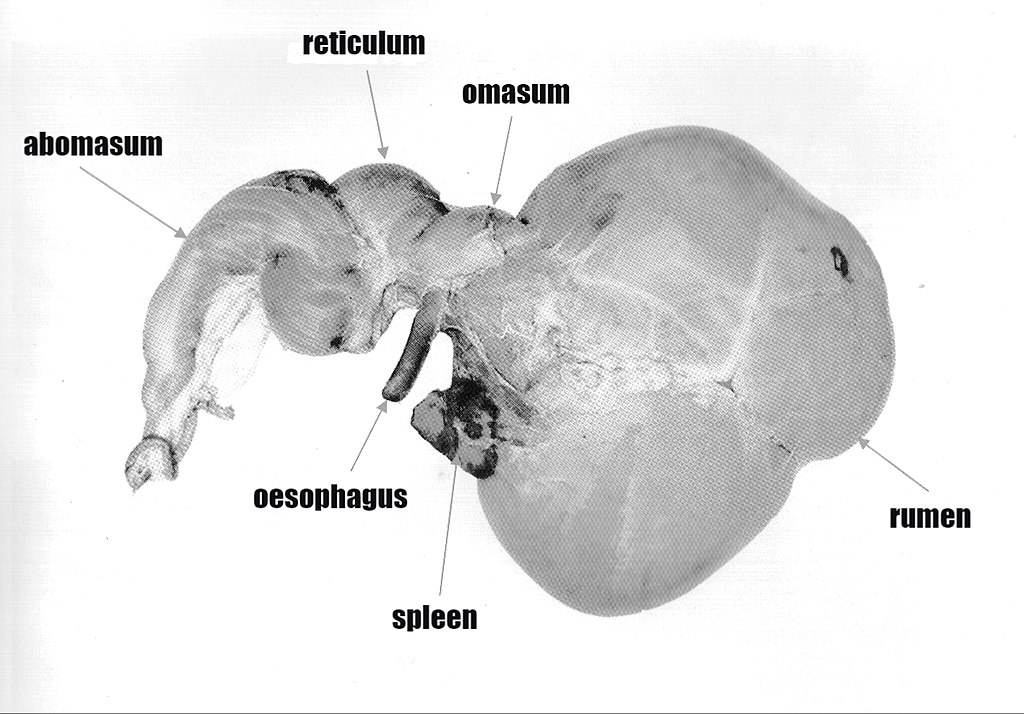
the rumen
What is the rumen in cows, cattle, goats, and other animals?
The rumen is the first (or second) forestomach in the ruminant’s digestive system. Cows and goats are ruminants, which neam they possess a rumen to help thm digest plants efficiently.
What is rumen acidosis?
Rumen acidosis (or just acidosis) is when the rumen pH shifts from neutral to acidic, causing metabolic issues in ruminants. Acidosis is a metabolic disease caused by a sudden influx of rich, high-energy food (like grain) into the rumen, forcing microbes to adjust their populations to accommodate the sudden change in nutrient availability. Conditions in the rumen become acidic, and this acidity enters the bloodstream through the ruminal wall. This acidic blood is pumped to other parts of the body, negatively affecting the animal and resulting in poor appetite, diarrhea, bloating, and, in severe cases, lethargy, dehydration, downer cattle and possibly death.
What causes rumen acidosis?
Rumen acidosis is caused by the bovine, sheep, or goat to eat too much high-energy feed too soon, and not allowing the rumen microbes sufficient time to adjust. It usually takes around 4 to 5 days for microbes to fully adjust to a gradual introduction of new feed (especially grain).
What are rumen microbes?
Rumen microbes are diverse bacteria, fungi, and protozoa adapted to live in an anaerobic (oxygen-free) subaquatic, dark environment.
What is rumen fermentation?
Rumen fermentation refers to the fermentation or anaerobic (no oxygen) decomposition that occurs to the plants that the ruminant consumes and sends down into its rumen. Fermentation is what is needed to break down plant matter and release important nutrients that the animal needs for its body systems as part of the ruminant’s digestive system.
When is the rumen fully developed in goats?
The rumen is considered fully developed when a goat kid (or sheep lamb) is 8 to 12 weeks old or 2 to 3 months old.
When is the rumen fully developed in calves?
Calves have a fully developed rumen by the time they are around 3 to 4 months old.
More Questions Answered… in Page Form
Some buttons are still inactive as their respective pages are being worked on by the site admin!